This Mexican engineer has made it his life’s mission to empower people with disabilities
Allie Torgan, CNN | 8/21/2026, 12:32 p.m.
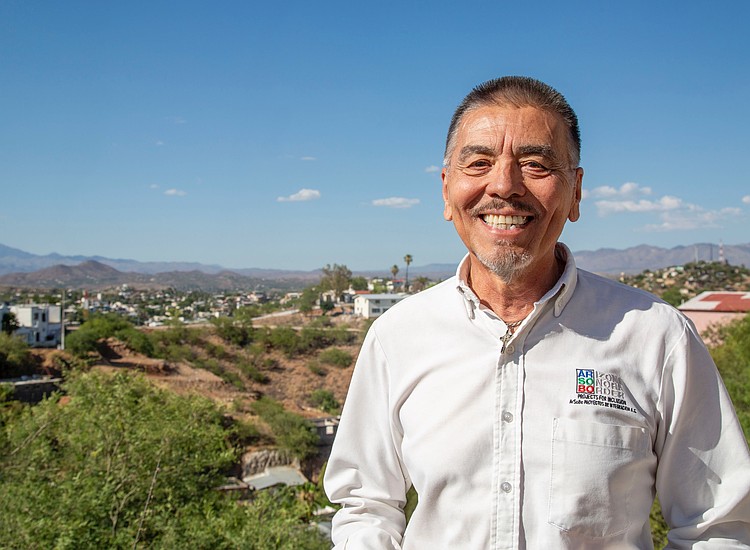
Francisco “Kiko” Trujillo
Allie Torgan/CNN via CNN Newsource
Francisco “Kiko” Trujillo’s efforts helping disabled patients along the US-Mexico border has saved and changed thousands of lives. It is work that found him and unexpectedly became his life’s mission.
In 2008, he was contacted by Dr. Burris “Duke” Duncan, a pediatrician in Tucson, Arizona, who specializes in treating children with disabilities. Duncan, then in his 70’s, was seeking a community partner across the border to help provide all-terrain wheelchairs for people whose disabilities left them unable to work or care for themselves.
When Duncan reached out to Trujillo, Trujillo was puzzled.
“I said, “What are you talking about? I don’t know anything about medical equipment,” Trujillo said.
Trujillo, an industrial engineer, was well respected for his innovative work implementing safer standards for poverty-stricken communities in Mexico. Born and raised in Nogales, Mexico, the fourth of twelve children, Trujillo had deep community roots. He’d also once dreamed of being a doctor but could not afford medical school.
“Everybody knows Kiko, and Kiko knows everybody. He and I just kind of jived together,” Duncan said. “(Kiko) said, “I’ve got to warn you, I only stick with a job for seven years, and so you got me for seven years.”
Custom care across the border
For Trujillo, the decision to team up with Duncan turned out to be a match professionally, but it was also personal. His brother had been born with a congenital condition and did not have a left hand. Although his brother ultimately thrived despite his disability, Trujillo says intervention could have helped him.
“When it comes to prosthetics and orthotics, none of the health programs in Mexico provide these devices,” Trujillo said. “You don’t even need to look at statistics to go out on the streets and see how many people you find using crutches and missing a leg.”
With Duncan’s medical knowledge and Trujillo’s community connections, they co-founded the nonprofit Arizona Sonora Border Projects for Inclusion, known as ARSOBO. Today, they provide wheelchairs, prosthetics, hearing devices, and rehabilitation programs to low-income families in Mexico and the US.
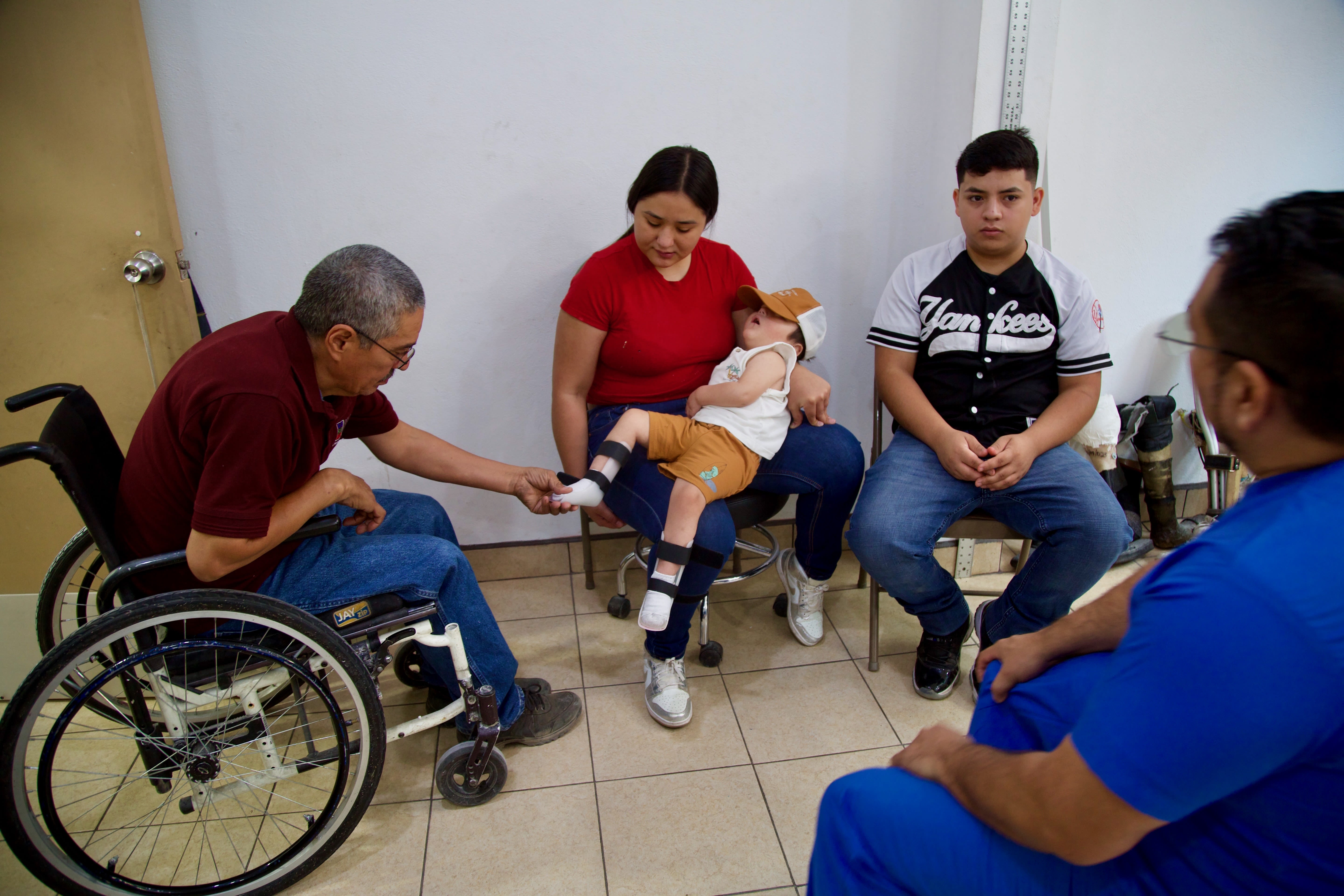
The group’s original focus was on building “Rough Rider’ wheelchairs. Designed by an inventor with paraplegia, the chair’s wide, flexible front wheels help it roll easily over uneven ground.
“We started getting requests for custom-made wheelchairs from families that had kids with cerebral palsy or neuromuscular disabilities,” Trujillo said. “These kids need them to preserve their position as they’re growing, so we started getting into the fabrication of customized wheelchairs.”
Overcoming barriers
ARSOBO also hires employees with disabilities to outfit the patients with their custom devices.
“We hire folks with the same disability as the device they’re going to be building; the person who makes prosthesis, he wears a prosthesis,” Trujillo said. “Once we receive people that have lost the limb, they’re devastated, they’re depressed. But when they talk to the guy that makes the prosthesis and he says, ‘I don’t have a leg, you’re going to get up, you’re going to do something with your life,’ they’ll listen.”
When people come in to get fitted, the technicians use their expertise and empathy to send a powerful message: These devices will empower them to take control of their mobility and their lives.
The organization partners with manufacturers and companies to offset the cost of materials, and they work with universities to bring doctors, students, and researchers across the border to provide services and training.
In 2016, ARSOBO began offering monthly hearing clinics run by faculty from the University of Arizona’s Speech, Language and Hearing Sciences Department. Last year, ARSOBO moved to a new, larger facility and began providing free physical therapy to help amputees adjust to their new prosthetics.
To date, ARSOBO has served nearly 3,500 people with disabilities.
“We’ve seen folks from 10 different states in Mexico, 97 different cities; we’ve helped kids from orphanages, from Central America, and we’ve helped folks living on the streets,” Trujillo said. “Nobody walks out of here without what they need.”
Transforming lives
More than 20 individuals with disabilities have been trained and hired by ARSOBO. The group has constructed more than 820 all-terrain wheelchairs; fabricated 900 orthotics and prosthetics; and distributed more than 740 hearing aids.
Empowerment is a central part of ARSOBO’s philosophy. Trujillo and Duncan’s aim is to enable people with disabilities to provide for their families and build rewarding lives. Patients pay what they can, when they can, Trujillo said.
Duncan, now 93, is well aware that Trujillo’s tenure has long exceeded the seven-year deadline he gave in the beginning.
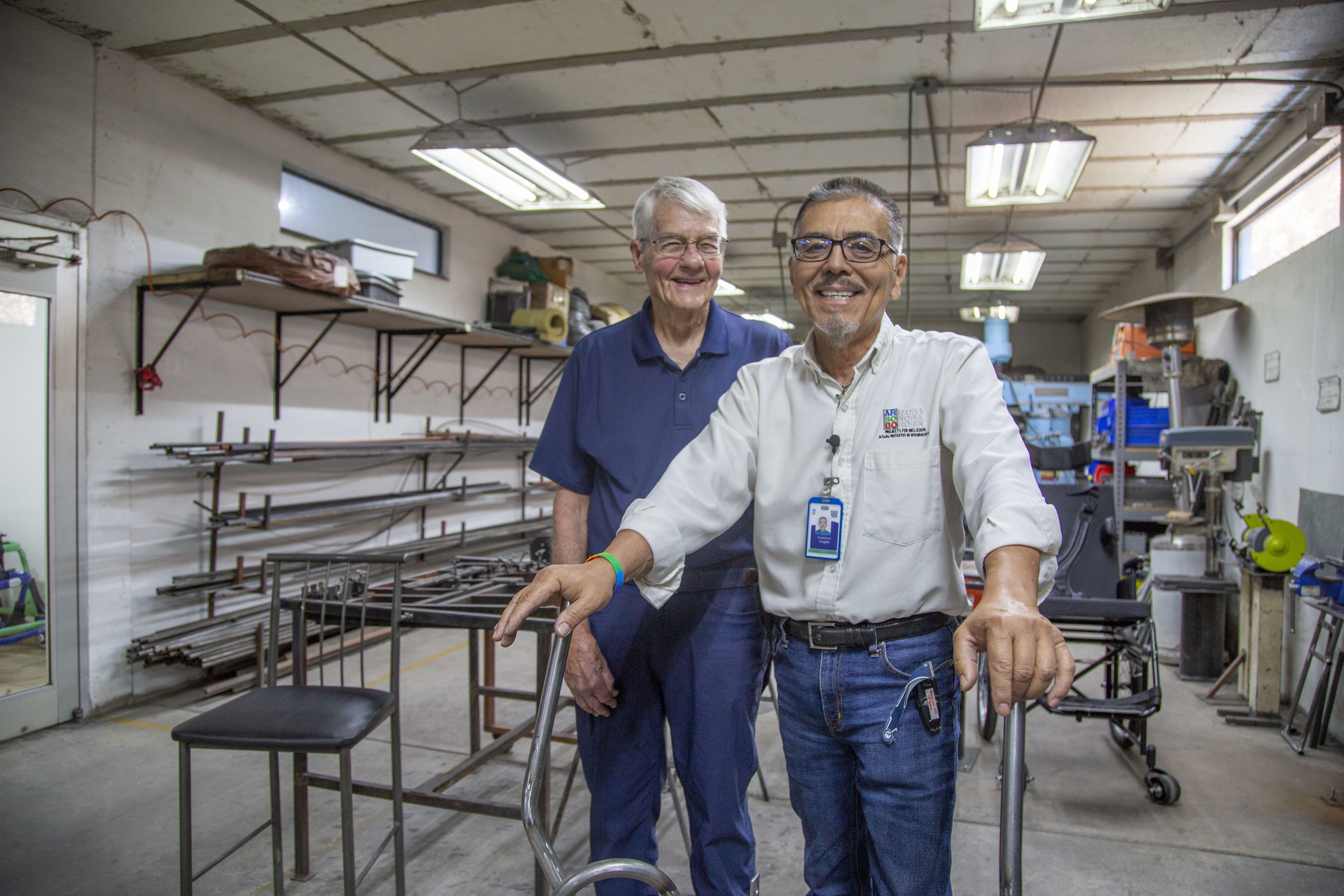
“It’s his life, and he gets so much enjoyment out of helping people reform their life and get on with their life,” Duncan said.
For Trujillo, that’s what keeps him motivated.
“We are changing the lives of not just the patient, but the entire family,” Trujillo said. “We have been able to involve all sectors of the society on both sides, and work towards helping people overcome the barriers that they face.”
Want to get involved? Check out ARSOBO’s website and see how to help.