Boston identifies gravestone believed to be among oldest of free Black person in America
Phil Tenser | 7/6/2026, 5:31 p.m.
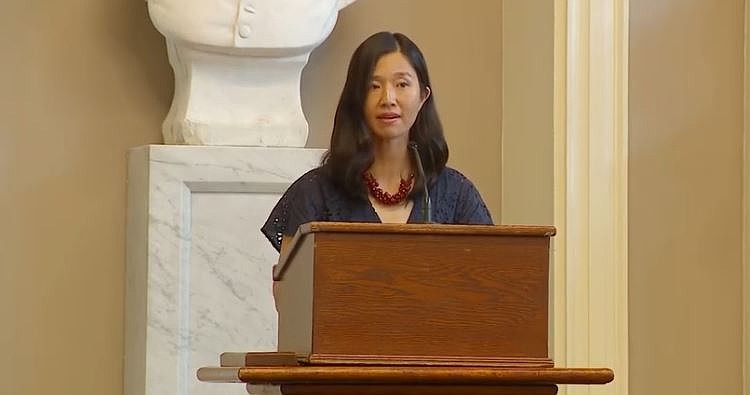
WCVB Mayor Michelle Wu
Willingham, James
Conservators at Boston's Granary Burying Ground recently found and restored what Mayor Michelle Wu described as one of the oldest gravestones of a free Black person in America. The mayor announced the discovery during the city's annual Independence Day Oration at Faneuil Hall.
Wu said the team believes the man was once enslaved under the name Sebastian Lake, but died free in 1729.
"That discovery is likely one of the oldest gravestones of a free Black person in America. It's been there all along. We just had to go look and share the story," Wu said.
In her July 4 speech, the mayor also highlighted the work of the city archaeologists who used a 251-year-old map to locate a Revolutionary War fort built on the eve of the Battle of Bunker Hill. She said archaeologists found the fort near the base of the Bunker Hill Monument and uncovered the trench along with musket balls and gun flints from the battle.
Mayor Wu said Boston is installing more than 40 new historic markers across Boston to recognize people and places that have been underrepresented in traditional histories.
As examples, she pointed to locations including the former Hyde Park Town Hall, where women cast ballots before it was legal, and the site where Boston students walked out of school to protest segregation.
The mayor said she wants children across Boston to see themselves reflected in the city's history.
"Every kid growing up in our city should know what's possible here. If a child in Roxbury or Chinatown or Mattapan learns that people like them built this country and this city, then leading it doesn't sound so crazy," Wu said.
Mayor Wu, a Democrat who has often clashed with the Trump Administration and Republican leaders at the national level, said the city's preservation work is intended to tell what she described as a more complete story of Boston and the nation around America's 250th anniversary.
"While the federal government tries to narrow the story of America, Boston keeps expanding it," Wu said.
She said a better understanding of the past can help shape future generations, adding that she wants children visiting museums, reading textbooks or walking through Boston to "find proof of what's possible in America" through stories of sacrifice, determination, struggle and progress.