Key moments from Trump’s speech claiming declassified documents show US election vulnerabilities
CNN News Wire | 7/17/2026, 9:01 a.m.
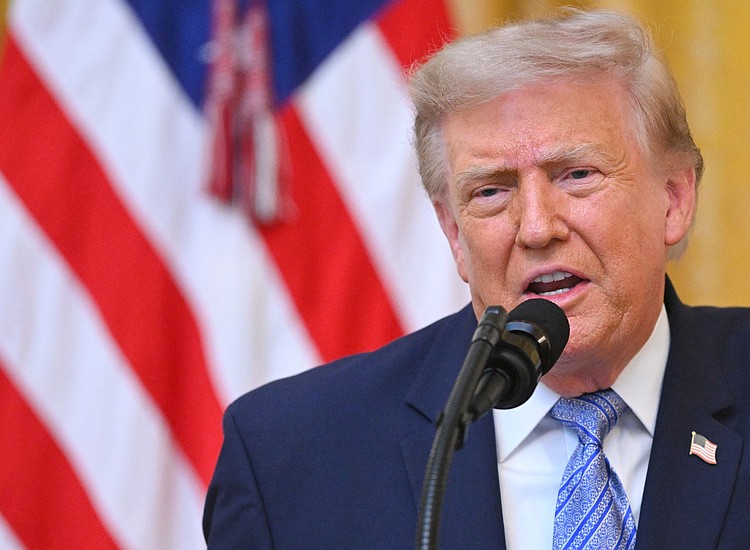
Donald Trump
Saul Loeb/AFP/Pool/Getty Images via CNN Newsource
President Donald Trump, in a primetime speech Thursday night, alleged vulnerabilities exist in American election systems, despite declassified documents released by his administration largely discussing vulnerabilities that have been known for years and that election officials around the country have tried to address.
Trump said the speech and release of documents are not meant to “weaken confidence” in US elections, though critics say he has done just that. For years, the US president has spread falsehoods about the 2020 election.
In the remarks, he addressed his economic agenda, immigration policies, election integrity, China, and more.
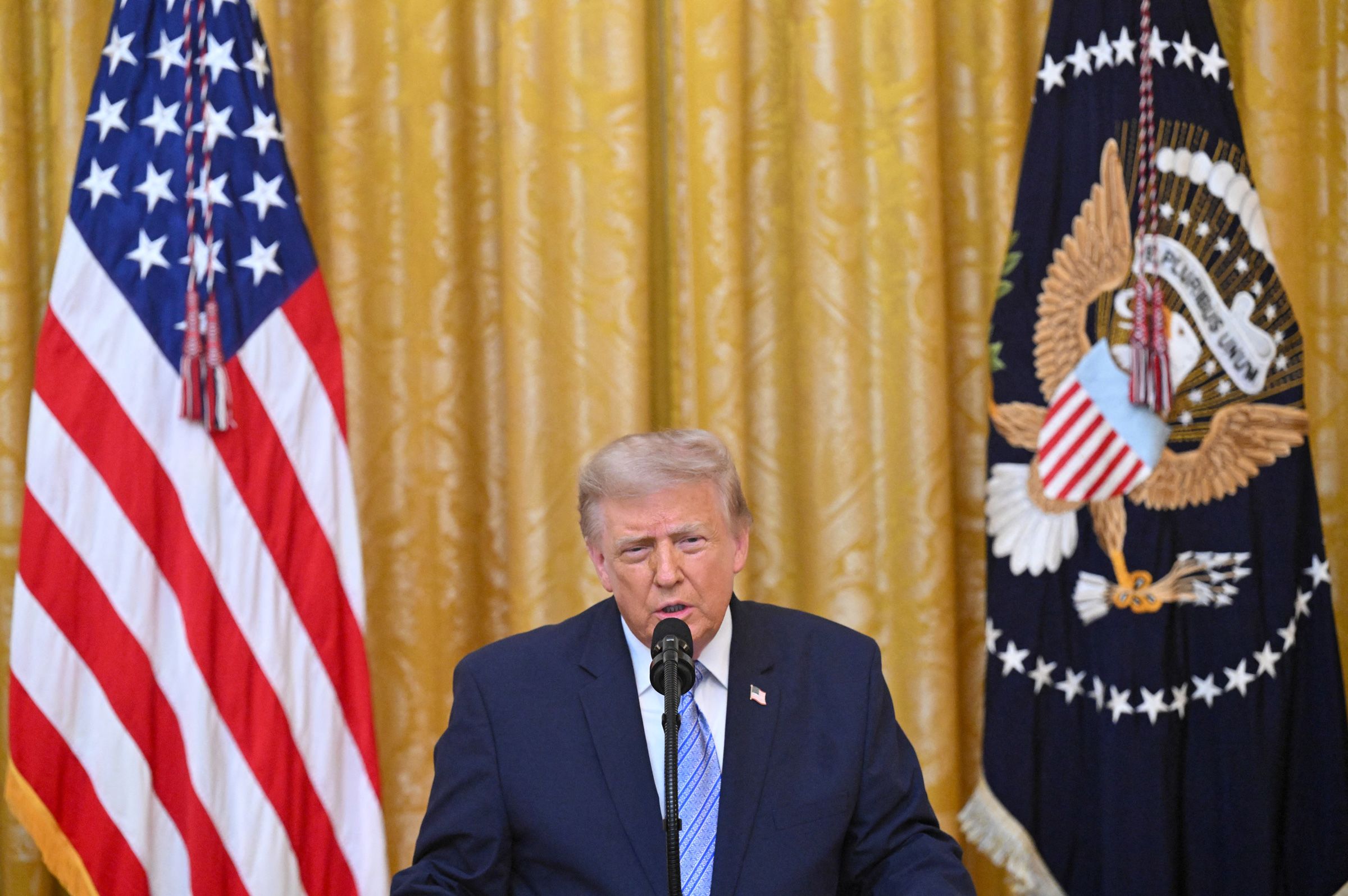
CNN reporters followed along the speech and reviewed the declassified documents. You can read highlights of the coverage below:
Declassified documents shed light on scope of Chinese hacking targeting Americans
From CNN’s Sean Lyngaas
Documents that the Trump administration released on Thursday shed new light on just how voracious Chinese intelligence services have been in collecting information on Americans.
Cyber espionage, or the use of hacking to collect sensitive information, and the use of cyberattacks to disrupt elections are two very different things. The documents show China doing the former, not the latter.
The documents show the lengths that Chinese hackers allegedly went to spy on senior US government officials and the 2020 presidential campaign of Joe Biden.
One Chinese hacking group was using techniques to track the email accounts of Biden campaign staffers, suggesting that “the Chinese operators are mapping out the target network for follow-on approaches, possibly including tasking campaign staffers’ e-mail accounts in the Chinese military’s signals intelligence system for collection,” one declassified intelligence report says.
Other reports in the collection of documents note that Chinese government actors have been downloading voter registration information in numerous states. In some cases, the information was already publicly available. But there is no mention of China actively exploiting the data on voters it collected or stole. There is instead intelligence analysis of what China could do with the data.
The personal information on Americans taken by one Chinese actor “could, in theory, be leveraged to carry out anything from future CNE (computer network exploitation) operations to election influence operations, although the actual motivations for collecting this information is unknown,” one intelligence report said.
The documents paint a picture of Chinese intelligence services that are collecting just about any information they can on hundreds of millions of Americans. That, in the aggregate, is not a new revelation. Between the 2015 hack of the Office of Personnel Management and subsequent hacks of American health care providers and other companies, US intelligence officials have long warned that Chinese spies have a detailed picture of tens of millions, if not hundreds of millions of Americans.
Trump’s claim Venezuela hacked voting machines echoes allegations from an ex-Venezuelan spy
From CNN’s Maria Santana
The claim promoted by the White House tonight that Venezuela experimented with hacking its own voting machines echoes allegations made by former Venezuelan intelligence chief and convicted drug trafficker Hugo “El Pollo” Carvajal in a letter to President Donald Trump.
Carvajal, a three-star general trusted by former Venezuelan leaders Hugo Chávez and Nicolás Maduro, led the country’s military intelligence service and later served in the National Assembly. He eventually broke with Maduro, endorsed opposition leader Juan Guaidó and fled to Spain.
He was arrested there in 2021 and extradited to the United States in 2023.
In his December 2025 letter obtained by CNN via his lawyer, Carvajal alleged, without providing evidence, that voting-technology company Smartmatic “was born as an electoral tool of the Venezuelan regime.”
Carvajal claimed elections “can be rigged with the software” and that it had been used to do so, but did not specify which elections.
Smartmatic rejected Carvajal’s account, saying it was never owned or controlled by the Venezuelan government and that no evidence showed its technology manipulated US elections.
The company says its technology was used only in Los Angeles County during the 2020 election.
Trump allies have long falsely accused Smartmatic of rigging the 2020 US election. A declassified CIA memo from June said the US intelligence community determined in 2006 that Venezuela and Smartmatic didn’t have the capability “to manipulate the outcome of elections outside Venezuela.”
Carvajal pleaded guilty in 2025 to narcoterrorism, drug-trafficking and weapons charges, including conspiring to import cocaine into the United States.
His sentencing has been postponed without a new date — a possible sign he may be cooperating with prosecutors, although no agreement has been confirmed. He could become a witness against Nicolás Maduro, who was captured by US forces and brought to New York to face narcoterrorism, cocaine-importation and weapons charges.
Maduro has pleaded not guilty.
Nevada, Pennsylvania push back on Trump claims about noncitizens on their voter rolls
From CNN’s Gabe Cohen
In his primetime address, President Donald Trump claimed the Department of Homeland Security, reviewing public data, found roughly 250,000 noncitizens registered to vote across four states: California, New Jersey, Nevada and Pennsylvania. It is unclear what data DHS analyzed to support that claim.
Nevada’s secretary of state’s office flatly rejected the assertion that thousands of noncitizens are on its voter rolls.
“These numbers are wildly speculative at best, and DHS has not shared anything that backs it up,” a spokesperson said.
Pennsylvania Secretary of the Commonwealth Al Schmidt raised similar questions in a statement to CNN, saying, “We welcome DHS sharing their methodology and list of potential ineligible voters so we can carefully review the validity of their claims.”
CNN reached out to DHS asking what voter data it reviewed from the four states, but the department did not immediately respond. The Justice Department is currently suing more than two dozen states to force them to turn over their full, unredacted voter rolls for screening through a DHS citizenship verification system, though courts have repeatedly blocked those efforts.
CNN has reached out to election officials in California and New Jersey.
Democratic governors say Trump is trying to ‘undermine free and fair elections’
From CNN’s Piper Hudspeth Blackburn
Twenty four Democratic governors accused President Donald Trump of attempting to undermine elections, saying they “stand ready to fight back against the Trump administration and stop any and all unlawful attacks on every American’s constitutional right to vote.”
“It’s deeply alarming that President Trump continues to try to undermine free and fair elections,” the governors said in a statement responding to Trump’s remarks that was posted to the Democratic Governors Association website.
“No amount of lies and conspiracy theories can change the fact that our country’s elections have repeatedly been proven to be safe and secure,” the statement continued. “These attacks are intended to intimidate and silence voters.”
The governors issuing the statement include: New York Gov. Kathy Hochul, Pennsylvania Gov. Josh Shapiro, Kentucky Gov. Andy Beshear and Minnesota Gov. Tim Walz.
Their comments come as states face increased pressure from the Trump administration to adopt a sweeping set of election changes championed by the president.
Last month, CNN reported that the administration is threatening to withhold tens of millions of dollars in federal homeland security funds unless states take steps that include including phasing out certain electronic voting systems and moving to hand-marked paper ballots, among other changes.
China denies Trump’s allegations of election meddling
From CNN’s Simone McCarthy and Steven Jiang
China denied President Donald Trump’s accusations that it aimed to influence US elections and had obtained tens of millions of US voter data records.
In a statement to CNN Thursday, a spokesperson at the Chinese embassy to the US in Washington said: “China has all along adhered to the principle of non-interference in others’ internal affairs. The US election is an internal matter of the US. Its outcome is determined by the votes of the American people.”
“China has never and will never interfere in the presidential elections of the US.”
Beijing has repeatedly denied past allegations related to election interference and political meddling from a number of Western nations, including Australia, Canada and Britain, as well as the US.
CNN has also reached out to China’s Ministry of Foreign Affairs for comment on the allegations.
CIA director praises Trump administration declassification
From CNN’s Aleena Fayaz
CIA Director John Ratcliffe on Thursday highlighted his department’s role in the Trump administration’s declassification of election-related documents this evening, saying the effort was meant to uphold “public confidence in elections.”
Critics say the declassification and President Donald Trump’s primetime speech could have the opposite effect, undercutting public faith in the electoral process.
“Protecting our democracy and the integrity of our elections from foreign influence and interference remains paramount,” Ratcliffe said in a post on X, adding, “These matters deserve public scrutiny to ensure our democracy’s foundation – the security and public confidence in our elections – is unassailable.”
The CIA was one of several agencies involved in the White House release of documents.
Ratcliffe was Trump’s director of national intelligence in his first term – when the intelligence community took a different position than what Trump described tonight. In 2021, an intelligence report released by the ODNI concluded that “we have no indication that any foreign actor attempted to alter any technical aspect of the voting process in the 2020 election, including voter registrations, casting ballots, vote tabulation or reporting results.”
Prominent 2020 election deniers praise Trump address
From CNN’s Donie O’Sullivan
Some of the most prominent proponents of conspiracy theories falsely alleging the 2020 election was rigged welcomed President Donald Trump’s declassification of election-related documents Thursday night.
On his live webcast, conservative firebrand Steve Bannon described Trump’s address to the nation as “incredibly powerful” and immediately began using it to sow doubts about the integrity of the upcoming midterm elections — even though Trump claimed that was not his intention.
“We need a National Security Emergency about the midterm elections immediately — this is a powerful predicate for that,” Bannon wrote in a text message to CNN.
He added further on his live program, “The midterms are going to be stolen like every other election has been stolen.”
Mike Lindell, the MyPillow CEO who infamously held a “cyber symposium” in 2021 that failed to deliver on its promise of proving the 2020 election was stolen, also welcomed Trump’s release of declassified documents.
“We have to get rid of the voting machines. Everything he said, including China, I have been saying for over five years,” Lindell told CNN after Trump’s address.
Michael Flynn, who served briefly as Trump’s first national security adviser in 2017, wrote on X after the address that “the CIA and NSA directors during his first term should immediately be arrested for treason.”
Election community relieved that Trump didn’t take any drastic steps Thursday
From CNN’s Marshall Cohen
Some election officials privately expressed relief Thursday night that President Donald Trump didn’t announce any new major or dramatic steps that would upend voting procedures.
In the run-up to his primetime address, rumors swirled throughout the election community about possible worst-case scenarios and unilateral actions Trump could take — like declaring a national emergency or trying to decertify voting machines.
Instead, his roughly 30-minute speech featured recycled complaints and debunked talking points about voter fraud, new material from unclassified documents, and a push for Congress to pass his controversial voting overhaul known as the Save America Act.
“He said nothing, basically,” one election official from a large jurisdiction told CNN on condition of anonymity. “For people who don’t trust elections, this resonates and validates their opinions. But it never moves the needle.”
But another person in the election community said, despite the temporary easing of anxiety, there are still plenty of concerns going forward. If Trump raised these supposed new election vulnerabilities, “when will he announce his corrective measures?” they said.
Some major election vendors reacted more cautiously.
“We are actively reviewing the President’s comments,” a spokesperson for Liberty Vote, formerly known as Dominion Voting Systems, said in a statement. “Our immediate focus is on our customers, the dedicated men and women who run elections, and supporting their efforts.”
Dominion’s machines are used in more than half of US states. Trump and his allies have repeatedly and falsely accused Dominion of rigging the 2020 election.
It’s too late for Trump’s elections overhaul, state officials of both parties warn
From CNN’s Tierney Sneed
President Donald Trump’s speech Thursday is unlikely to affect the legislative hurdles blocking the SAVE America Act, the sweeping elections legislation he’s championed that would impose strict voter ID mandates nationwide and require proof of citizenship be provided when registering to vote.
But election officials warn that, even if it were enacted, implementation with a general election just three-and-a-half months away would cause major disruptions. The current version of the bill would put its requirements into effect immediately.
“It seems nearly impossible to implement something of that size and scope in 110 days,” said Minnesota Secretary of State Steve Simon.
He said that elections in his state are carried out by 30,000 workers known as election judges. “They would all have to be trained about how to spot a real versus a fake birth certificate or a real versus a fake marriage record,” Simon, a Democrat, told CNN Thursday morning, referring to the workaround in the bill for married voters who have different names than what’s on their birth certificates.
Iowa Secretary of State Paul Pate, a Republican, told CNN this week that even though Iowa already has some of the bill’s requirements at the state level, other provisions would be new. He said that “Congress has failed miserably by not coming to the experts to make sure [the federal bill] can even be implemented.”
“Right now, I don’t know if the American public — and I don’t even know if all of the Congress — really know what’s in that Save Act,” he said.
Michigan secretary of state blasts Trump’s claims of voter fraud, says elections remain ‘secure and safe’
From CNN’s Adam Cancryn
Michigan’s secretary of state on Thursday accused President Donald Trump of sowing doubt in the nation’s electoral system, insisting that the state’s elections were “secure and safe” in 2020 and all subsequent elections.
The statement by Jocelyn Benson, who is also running for governor as a Democrat, came after Trump invoked Michigan in his primetime speech, claiming that evidence of voter fraud in 2020 had “been buried and covered up.”
Benson dismissed Trump’s remarks as “long debunked and baseless conspiracy theories about an election he lost almost six years ago,” adding that “none of his rhetoric changes what’s true: Michigan’s elections are secure and safe and the results are an accurate reflection of the will of the people.”
Michigan Attorney General Dana Nessel also rejected Trump’s claims in a separate statement, vowing to resist any effort by the Justice Department to interfere with state or local administration of elections.
Trump’s allegations threaten to upend US-China ties at sensitive moment
From CNN’s Simone McCarthy
President Donald Trump’s claim that China has waged a campaign of interference in US elections threatens to upset a fragile stability between the two powers ahead of an expected visit by Chinese leader Xi Jinping to the US in September.
Beijing has long bristled at – and strongly denied – allegations of political or election inference raised by the US and its allies. It says such activities contradict China’s principle of “non-interference” in other countries’ internal affairs.
China has also repeatedly slammed the US for what it says is Washington’s meddling in other countries’ business.
Trump’s latest allegations are likely to cast a shadow over Beijing’s preparations for Xi’s upcoming trip – expected to be the next key touchpoint in an effort to strengthen fraught ties between the world’s two largest economies.
Relations cratered last year due to spiraling disagreements over trade, tariffs and export controls on key strategic goods. An even keel had only been restored following a Trump-Xi meeting in South Korea last fall, and then a landmark visit by Trump to Beijing in May, the first by an American president in nine years.
There, the two sides hailed an era of “constructive strategic stability,” and Trump invited Xi to the US in September. Beijing confirmed in May that Xi would make a fall visit to the US.
Cabinet officials, campaign staff and White House aides on hand for Trump’s speech
From CNN’s Donald Judd
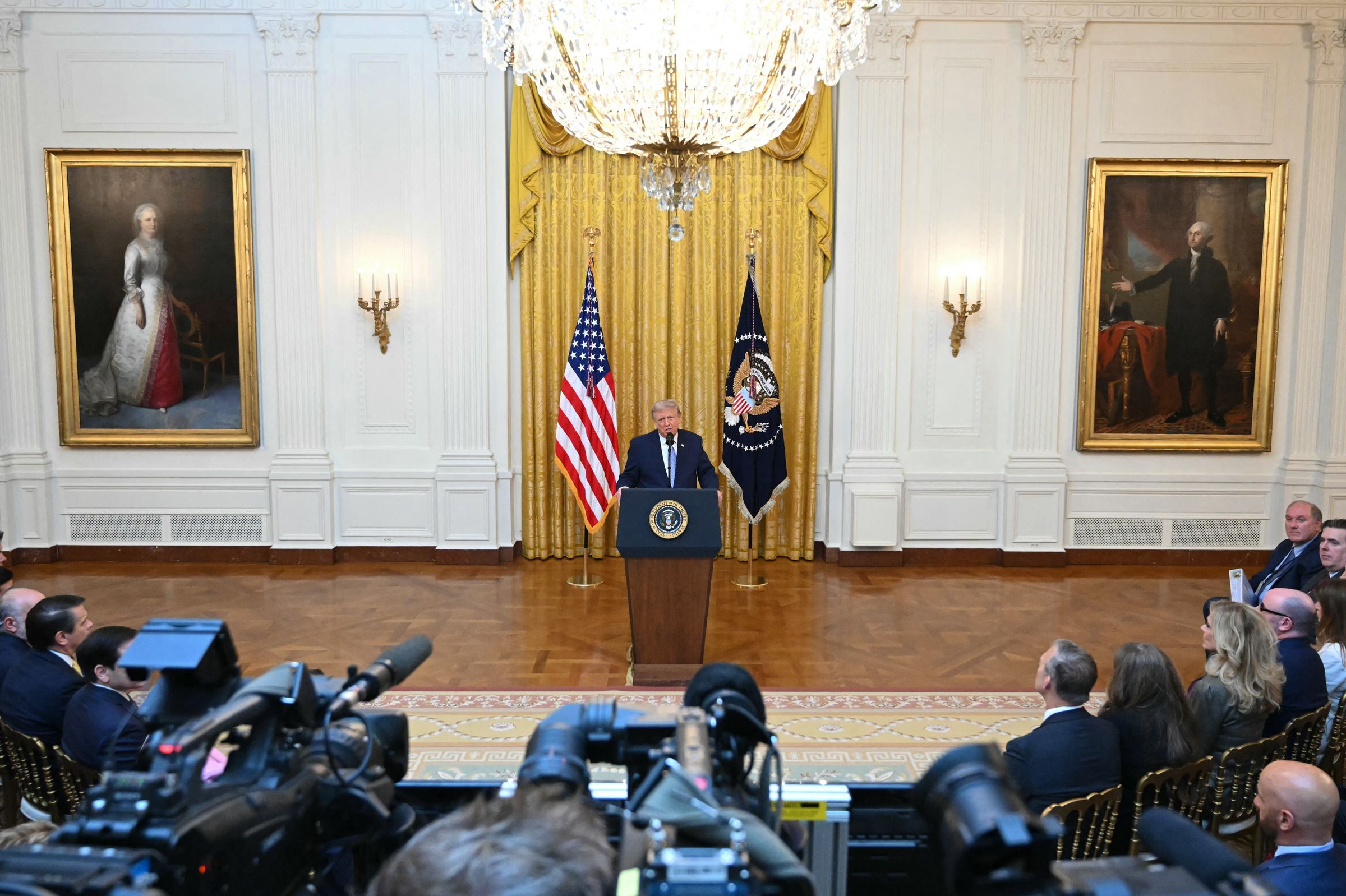
When President Donald Trump delivered election security remarks from the East Room Thursday, he was joined by members of his Cabinet, White House officials, and members of his political operation.
Vice President JD Vance, White House Chief of Staff Susie Wiles, Secretary of State Marco Rubio, acting Attorney General Todd Blanche, Commerce Secretary Howard Lutnick, acting Labor Secretary Keith Sonderling, Transportation Secretary Sean Duffy, and Energy Secretary Chris Wright were all seated in the front row.
Former journalist and special government employee John Solomon, who’s been tasked with leading White House “transparency” efforts was also seated in the front row holding a binder.
Homeland Security Secretary Markwayne Mullin, Education Secretary Linda McMahon, SBA Administrator Kelly Loeffler, Agriculture Secretary Brooke Rollins, FBI Director Kash Patel, acting Director of National Intelligence Bill Pulte were also on hand.
Trump aide Peter Navarro — who served a four-month sentence after defying a federal subpoena from the House Select Committee that investigated the January 6th, 2021 attack on the Capitol was also present in the East Room as was Trump campaign senior adviser Jason Miller.
And a number of aides, including White House comms director Stephen Cheung, press secretary Karoline Leavitt, and aide Natlie Harp were also present.
Trump directs FBI to investigate alleged voter registration fraud in Michigan
From CNN’s Elise Hammond and Holmes Lybrand
President Donald Trump claimed tonight that an alleged fraud scheme around voter registration in Michigan in 2020 was covered up by federal officials.
“In other words, it was pay, play and cheat,” Trump said. “The FBI agents working on the case believed that crimes were committed, yet the Biden Department of Justice slow-walked the investigation and killed it.”
The investigation stemmed from earlier probes into thousands of fraudulently filled out voter registration cards by people paid to get others to register to vote in Muskegon County, Michigan.
State and federal investigators uncovered evidence that Democratic canvassers in Muskegon, Michigan were paid to collect filled out registration cards but instead put in fake names and information. The fraudulent voter registration cards were flagged by the county’s clerk and, the documents released in support of the president’s claim note, did not result in any fraudulent votes being cast.
State and federal prosecutors declined to prosecute anyone following the investigations, despite criticism from Republican state lawmakers.
Trump said he is asking the FBI director to work with the Department of Justice to “prosecute those responsible for any crimes.”
Michigan officials denied what they called “baseless accusations” that the state’s elections are not secure, and pushed back against “DOJ’s intention to deploy federal election monitors to various polling locations during the August primary election.”
Trump barely mentioned the Iran conflict in wartime, primetime address
From CNN’s Betsy Klein
President Donald Trump sought a rare primetime address in wartime to speak directly to the American people, but he did not use the opportunity to clearly lay out his case for a path forward for the conflict in Iran that has escalated in recent days.
In fact, he barely mentioned the war.
“We have the strongest and most powerful military by far anywhere in the world. I built it during my first term, and unfortunately, we’re forced to use it now,” he said from the East Room Thursday night.
The United States, he added, is “winning big in Iran, and you will see the fruits of that labor very, very shortly.”
That was the president’s only reference to the conflict, as strikes have intensified throughout the week following the total breakdown of a ceasefire agreement.
The US military said Thursday it launched a wave of airstrikes for the sixth consecutive night, and CNN has reported that Trump is now receiving options for expanding the US military operation in Iran as he weighs next steps.
But Americans are skeptical of Trump’s strategy, with gas prices and the cost of living ticking up at home. A new Washington Post-Ipsos pollreleased Thursday reveals that just 29% of Americans approve of the president’s handling of the Iran conflict.
Trump renews plea for elections overhaul bill that faces staunch Senate opposition
From CNN’s Adam Cancryn
President Trump on Thursday sought to rally support for his stalled federal elections overhaul legislation, urging Americans in a primetime speech to demand that Congress pass the bill.
The plea follows Trump’s repeated failures to convince lawmakers in his own party to advance the overhaul, which faces staunch opposition in the Senate and no immediately viable path to passage into law.
“I ask you to pick up your phone tomorrow, call your representatives in the House and Senate, and demand that they pass the SAVE America Act without delay,” he said.
Trump has nevertheless continued to push for the bill for weeks, at one point refusing to sign separate bipartisan housing legislation in protest of the lack of movement on the SAVE America Act. On Thursday, he renewed his baseless claims that failing to approve the measure would open the door to rampant cheating in November’s midterm elections.
“Addressing this crisis of election security demands that Congress must pass the SAVE America Act,” he said. “How easy is that to do? Unless you want to cheat.”
China has long denied Western allegations of election interference
From CNN’s Simone McCarthy
China has repeatedly denied past allegations related to election interference and political meddling from a number of Western nations, including the US.
Those include a 2020 warning from the US National Counterintelligence and Security Center that Russia, China and Iran would all try to interfere in the 2020 presidential election, using online disinformation and other means.
At the time, China’s Foreign Ministry vehemently denied the charges, calling them “simply absurd and ridiculous,” and saying US elections were America’s “internal affair.”
“China has never interfered in it and has no interest to do that in the future. At the same time, we have repeatedly said that those in the US should immediately stop the trick of dragging China into their domestic politics,” Foreign Ministry spokesperson Zhao Lijian said at the time.
China has also faced allegations of political or election interference from other Western democracies in recent years, including Canada, Australia and Britain.
Trump claims US spy agencies did not disclose compromised voter data in 2020
From CNN’s Tori B. Powell
President Donald Trump has claimed that data showing “an unprecedented election security nightmare” was not disclosed to him or Congress.
He said tonight that “members of the deep state” worked to “actively suppress and downplay information about the extent of China’s sinister election meddling, covering it up from both the president and the American people like nobody thought was possible.”
The president went on to accuse US spy agencies of knowing about compromised voter registration files in 2020, claiming that data across multiple states was “bought, stolen or hacked by China.”
“Yet those responsible for sounding the alarm instead kept the information secret and hidden,” he alleged. “They did not disclose to me as president or to anyone else, and to the best of our knowledge, they did not inform Congress.”
Documents and notes released Thursday by the Trump administration were intended to round up everything the US government had information about that was tied to past reports, said a source with direct knowledge of the US intelligence community’s assessment of foreign interference efforts around the 2020 election.
But once that additional underlying information was vetted, the source said it was not considered consequential or credible enough to include.
Also, China has a long history of espionage, like the allegations outlined by Trump tonight. Chinese hackers breached federal government servers in 2015 and stole more than 20 million sensitive records from the Office of Personnel Management.
Beyond accessing voter rolls, on the topic of trying to influence or interfere with election results, one new report from the National Intelligence Council from October 2020 said China’s activities regarding that year’s presidential election were “low-level” and confined to “exploratory steps.”
After the 2020 election, Trump appointees at the DNI later publicly announced that China considered trying to influence the outcome but decided not to, due to concerns of upsetting US-China relations.
Trump cites inflated data to claim 278,000 non-citizens are registered to vote
From CNN’s Tierney Sneed, Fredreka Schouten and Betsy Klein
President Donald Trump claimed Thursday that his Department of Homeland Security has uncovered approximately 278,000 non-citizens in state voter rolls, citing data uncovered in a program that has been documented to inflate non-citizen numbers.
“We are releasing the results of a stunning investigation by the Department of Homeland Security. According to the DHS review, state voter rolls, and public records, they identified approximately 278,000 non-citizens who are registered to vote in federal elections,” the president said.
Trump went on to suggest that “the real number is actually much higher than that.”
But the data-matching program Trump cited is known to present an inflated number of suspected non-citizens, in part because naturalized citizens are often flagged wrongly as non-citizens. The agreement that DHS has entered with states that use the program – SAVE (Systematic Alien Verification for Entitlements) – to vet their rolls warns that they must do their own due diligence in reviewing the results, in compliance with the law, before using it for voter purges.
The system, which has long been used to verify the citizenship and immigration status of people seeking government benefits, has been expanded by the Trump administration to pull in data from several government agencies in its hunt for proof that foreign national have infiltrated federal elections.
Trump said DHS Secretary Markwayne Mullin will address the data further on Friday.
Trump says DHS secretary will hold briefing Friday on efforts to secure elections
From CNN’s Donald Judd
President Donald Trump said Thursday that Secretary of Homeland Security Markwayne Mullin will hold a briefing Friday “to outline his department’s recent work confirming cyber vulnerabilities in our electronic voting systems.”
The move comes as the administration released a new batch of documents about alleged election vulnerabilities. Though the documents are newly declassified, they largely discuss vulnerabilities that have been known for years and that election officials around the country have tried to address.
Speaking from the White House East Room, the president said that the administration is “in the process of informing governors, senators, and members of Congress of potential issues in their states.”
“If you look at voting today, it’s in such bad shape in so many states, and we are committing to fix it,” he said. “And we’re also committing to be working with those states and local jurisdictions to help them fix and patch known technical vulnerabilities before the midterm elections.”
Trump warns election system ‘falls catastrophically short’ in bombastic telling of vulnerabilities
From CNN’s Donald Judd
President Donald Trump began his remarks on America’s elections tonight with stark rhetoric casting doubt on the nation’s election security, claiming it “falls catastrophically short.”
“America is back and doing really well, but we still have a major challenge that must be urgently addressed, because no country could be great without fair and honest elections,” Trump said, speaking from the White House East Room.
“Every American deserves to know that when they cast their vote, that vote will be counted accurately in a system, and that is to make that system secure — one where cheating and interference are not just difficult, but virtually impossible,” the president added.
Since returning to the White House in 2024, Trump has repeatedly — and without evidence — claimed that the 2020 presidential election was “rigged” against him. As a candidate, Trump has made efforts to cast doubt on the fairness of the nation’s elections in 2016, 2020 and 2024.
Trump cast a dark picture of the nation’s elections system, warning, “the election system we have dangerously exposes — and really exposes, like levels never thought possible — to hacking, exploitation, and foreign interference,” while claiming “this vital information has for many years been covered up and hidden from you.”
Throughout his remarks, Trump used extreme rhetoric to cast doubt on the nation’s elections, claiming at one point, “This is worse than any third world country — there’s no third world country that has elections like we have.”
Despite those claims, Trump did not provide evidence of any actual ballots fraudulently cast in the 2020 election.
Trump claims declassified documents show Venezuela had undetectable vote-rigging methods
From CNN’s Alejandra Jaramillo
President Donald Trump claimed Thursday that newly declassified documents show Venezuela developed a method to secretly alter election results, reviving allegations about voting technology that have long been disputed by US intelligence officials and election experts.
Trump, speaking during his prime-time address, the documents detail what he described as a Venezuelan effort to manipulate election systems.
“Today, we are releasing documents that show the CIA obtained reporting of a specific plot to do a big number in favor of the corrupt Maduro regime in Venezuela,” Trump said. “And that’s exactly what happened, conspiring to digitally rig their own country’s elections in 2020, and that’s what they did,” the president added.
Trump claimed the reporting described methods “develop to digitally alter vote totals in ways that could not be detected even with an audit, no matter how deep they went.”
The machines, the president was referring to, were made by Smartmatic, a company that Trump allies have falsely accuses of rigging the 2020 US election, largely because of its past ties to Venezuela.
A declassified CIA memo from June said the US intelligence community determined in 2006 that Venezuela and Smartmatic didn’t have the capability “to manipulate the outcome of elections outside Venezuela.”
The CIA memo found that “while the intelligence validated significant concerns about foreign-linked voting technology vendors, it did not definitively confirm that large-scale electronic fraud was successfully executed in specific Venezuelan elections.”
Smartmatic software is used in Los Angeles County, and the company has called allegations that its systems were used to rig US elections “completely baseless” and repeatedly debunked. While experts have identified vulnerabilities in some voting systems, there is no evidence that any foreign adversary has successfully exploited them to change votes in a US election.
Trump claims China worked against him in the 2020 election despite intel saying it didn’t
From CNN’s Adam Cancryn
President Donald Trump on Thursday claimed that China sought to meddle in the 2020 election to prevent him from winning, even though US intelligence agencies long ago concluded that the nation ultimately chose not to interfere in the race.
That conclusion was repeated in documents the Trump administration declassified ahead of the speech.
“The Chinese government wanted US president to lose the next election,” he said during his primetime speech. “And the reason they wanted me to lose is because they knew I was wise to them.”
Trump cited intelligence agency findings in backing up his claims, quoting CIA reports that he said showed China wanted to “leverage all domestic and foreign elements that were opposed to the US president in an effort to reduce the US president’s votes” as far back as mid-2018.
But those claims appeared to be drawn from the minority view first mentioned in a 2021 intelligence analysis that instead concluded that China did not make any major effort to influence the election out of fear of upsetting its relations with the US.
The minority view was included in that assessment for transparency, but even the senior intelligence officer who offered that view “agrees that we have no information suggesting China tried to interfere with election processes,” the assessment said.
Trump touts sinking inflation and stock market gains as evidence of ‘hottest country’
From CNN’s David Goldman
President Donald Trump opened his primetime address touting America’s strong economy and financial markets.
He claimed: “more Americans are working today than ever before” — a factual claim that needs context. That’s almost always true during an economic expansion. Labor market gains have remained relatively robust this year, although June’s job gains came in below economists’ expectations.
Trump also touted the largest monthly decline in inflation in more than six years. That’s also true — inflation fell 0.4% in June, the biggest monthly decline since the pandemic.
But prices fell entirely because of lower oil and gas prices in June, a trend that has reversed itself in July as the United States and Iran resumed their war and oil tanker traffic through the Strait of Hormuz slowed to a trickle.
Trump also said stock markets were at all-time highs. That’s nearly true but not quite accurate: The S&P 500 hit its most recent record on June 2 and has fallen 1% since then.
Stocks have been up and down over the past month as investors grow nervous about the high cost of AI technology.
Trump says release of documents is not meant to ‘weaken confidence’ in US elections
From CNN’s Molly English
President Donald Trump said the release of declassified documents related to election integrity, the focus of his Thursday night address, to the nation is not meant “weaken confidence” in US elections, despite years of insisting there have been irregularities in elections.
“Our purpose in disclosing this information is not to weaken confidence in election, but to earn that confidence by confronting vulnerabilities and correcting them very, very quickly,” Trump said. “And that’s what we’re doing.”
Trump has long insisted that irregularities marred the 2020 election, which Joe Biden won. And he’s repeatedly excoriated Congress for not passing his elections overhaul bill, which has stalled in the Senate, even refusing to sign a bipartisan measure to bring down the cost of housing as he pressured lawmakers to clear the elections legislation.
Trump casts blame on China for US election data compromise
From CNN’s Betsy Klein
President Donald Trump squarely took aim at China for what he claimed was “the largest compromise of election data in history” in the 2020 US presidential election, largely reiterating the conclusion of a declassified 2021 intelligence report.
Trump said in a primetime address that China illegally acquired 220 million US voter files, including names, contact information, party preferences, and “other sensitive data,” calling the breach an “unprecedented election security nightmare.”
The president suggested that China worked to “undermine my first administration and our 2020 campaign,” along with efforts to influence the 2018 midterm elections, when Democrats won control of the House of Representatives.
Trump also accused China of leveraging contacts with US businesses to “turn against” him and “identify US journalists … to write more negative articles about him.”
Some key context: China considered trying to influence the outcome of the 2020 election but chose not to out of fear of upsetting US-China relations, US intelligence agencies concluded in a report declassified in 2021.
But there was a minority, or differing, view in the intelligence community that China had in fact acted. The then-National Intelligence Officer for Cyber assessed that China took “at least some steps to undermine former President Trump’s reelection chances, primarily through social media and official public statements and media,” as the intelligence community assessment said.
Trump’s comments come two months after he traveled to China to meet with the country’s leader, Xi Jinping, and ahead of an expected visit by Xi to the White House in late September.
Trump opens address with economy and immigration before turning to election issues
From CNN’s Alejandra Jaramillo
President Donald Trump opened his address tonight by highlighting his administration’s economic agenda and immigration policies, despite previewing the speech as focused on election integrity.
Beginning his remarks, Trump declared, “We are doing great,” before pointing to the latest inflation report and promoting his Trump Accountsinitiative.
“This week, it was announced that inflation saw the largest monthly decline in more than six years,” Trump said. “It’s just given out.”
The president then shifted to immigration, crime and Venezuela, arguing his administration had dramatically strengthened border security.
Trump touts TrumpRx and Trump Accounts initiatives in appeal to voters’ affordability concerns
From CNN’s Adam Cancryn
President Donald Trump used part of tonight’s primetime speech to tout two of his eponymous economic initiatives: The prescription drug site TrumpRx and the Trump Accounts investment vehicle.
Trump boasted that the TrumpRx site would result in vastly lower drug prices for Americans, though there is little clear evidence to date that the initiative has significantly cut the cost of drugs.
He also urged parents to sign their children up for the just-launched Trump Accounts, which provide some federal seed money to invest alongside any personal contributions.
“Billions and billions of dollars are being invested, put in by companies and individuals to take care of our children, so that at age 18 they will have potentially hundreds of thousands of dollars in their account,” Trump said. “Sign up your child or any child who’d like to sign up.”
The initiatives are part of the affordability agenda that the White House has sought to push ahead of November’s midterms, in an effort to assuage Americans’ anxieties over the cost of living.
Ahead of speech, Democratic elections chiefs accuse Trump of making elections less secure
From CNN’s Tierney Sneed
As they wait to see what President Donald Trump will say tonight, Democratic election chiefs are accusing Trump of making elections less secure by withdrawing federal supporting for election administration, while attempting to drastically change the rules months away from the midterms.
“How do you say you care about safe and secure elections when you’re trying to throw all of these wrenches into the works when that all needed to be decided 18 months ago?” Vermont Secretary of State Sarah Copeland Hanzas told CNN from the summer conference of the National Association of Secretaries of State, which has brought election officials from both parties to Rapid City, South Dakota this week.
Election officials told CNN they are confident in the preparation they had done for the midterms – and in their ability to fend off potential attempts by the Trump administration to intervene. But they said that a top focus was countering disinformation and voter confusion, particularly with the rhetoric coming out of Washington, DC.
“We’ve heard a lot of this rhetoric before, and none of it makes sense to me,” Connecticut Secretary of State Stephanie Thomas told CNN. “Trust the 2016 election results. Don’t trust the 2020 election results. Trust the 2024 election results, but don’t trust it enough because we’re going to change everything about it.”
Minnesota Secretary of State Steve Simon told CNN that a major priority of his office was communicating to voters that election rules in his state have not changed.
“The biggest challenges are that the swirl and the noise around the White House’s constant attempts to insert itself into elections would somehow distract from the mission ahead of us, which is to provide an election that is fair and accurate and honest,” he said.
GOP lawmaker wants Trump to ‘get past the 2020 election’ and focus on issues like affordability
From CNN’s Sarah Ferris
GOP Rep. Brian Fitzpatrick said on Thursday that he hopes President Donald Trump will be able to move on from the 2020 election and instead focus during his address on issues like the affordability crisis many Americans are facing and the Iran war.
“I want him to get past the 2020 election,” Fitzpatrick said. “I’d like for him to talk about hopefully his thoughts on Iran. Talk about the issues people care about. People care about affordability. They want to know what’s going on with the Iran conflict.”
He went on to say, “how are we going to go about lowering the costs of goods and services and food and fuel and housing and childcare and all those things? That’s the most important issue.”