Missouri City Council Members Dedicate Freedom Tree Park
A 14-Year-Old Heiress, a Community’s Emancipation and a Living Oak That Still Speaks
Burt Levine | 7/29/2026, 10:16 a.m.

Council member Sharita Thompson, Mayor Pro Tem Lynn Clouser, and Council member Sonya Brown Marshall
MISSOURI CITY, Texas — Beneath a punishing July sun, Missouri City opened Freedom Tree Park on Saturday with prayers, flags, proclamations and a promise: This ground will no longer whisper its history. It will teach it.
The Saturday, July 25, 2026, ribbon-cutting transformed a treasured landmark into a fuller public destination for reflection, recreation and community gathering. The nearly five-acre park plan called for open green space, walking paths, a playground, pavilions, interpretive features and public art. Its centerpiece, “Liberation After,” was created by Missouri City artist Anthony Suber to deepen the site’s story through art. The city described the grand opening as a celebration of freedom, resilience and community.
Yet one name in the story deserves thoughtful attention: Bettie Palmer.
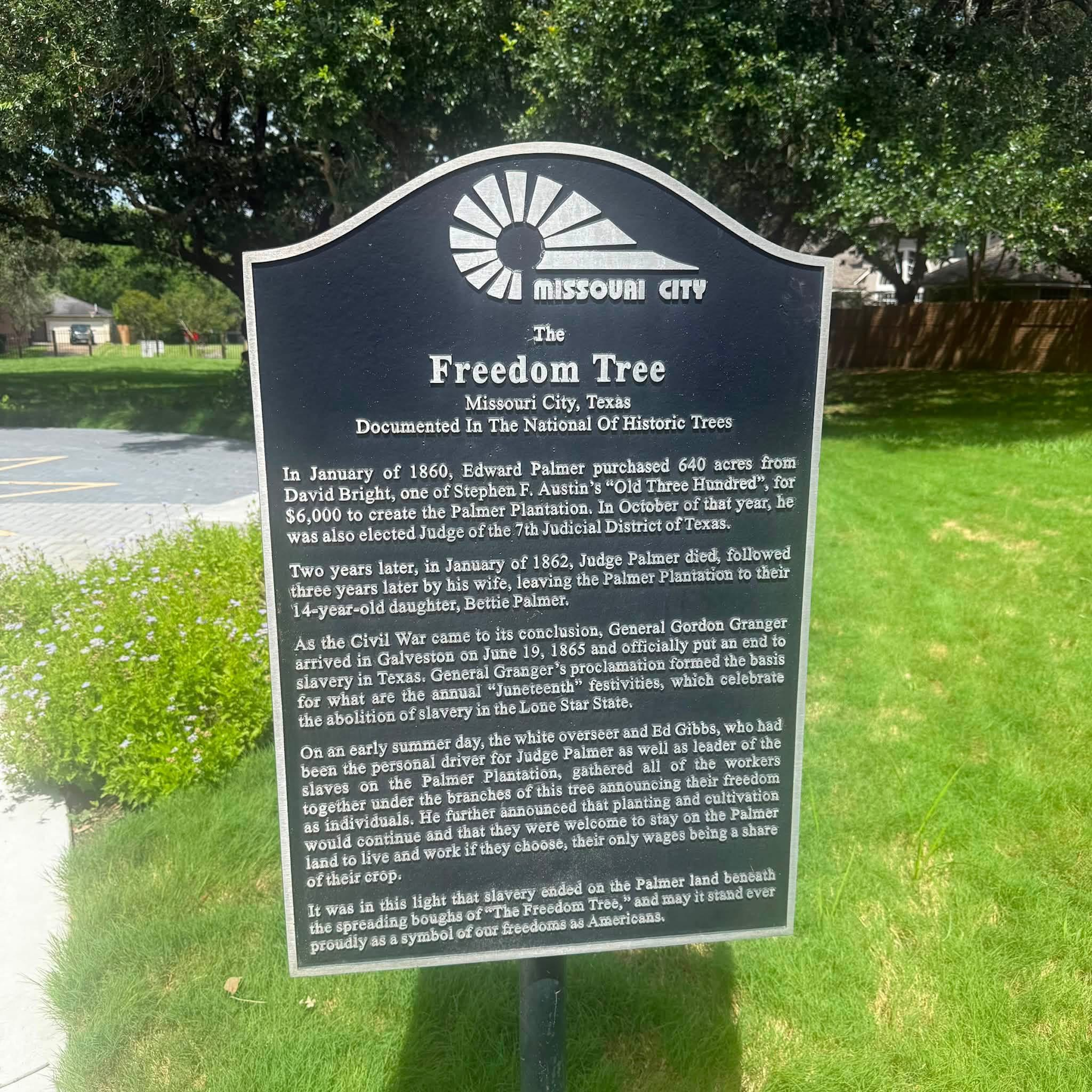
In 1865, Bettie was only 14 years old. City history records that her father, Judge Edward Palmer, purchased 640 acres for $6,000 in 1860 and established the Palmer Plantation. He died in 1862; Bettie’s mother died three years later, leaving the plantation to their teenage daughter. The legal records may have called her an heiress, but the word sounds far grander than the reality: She was an orphaned child inheriting land, adult responsibilities and a brutal social system she did not create.
History should never romanticize plantation life or reduce the enslaved men, women and children who labored there to background scenery. But history should also resist turning a 14-year-old into a convenient symbol of adult evil without evidence of her choices, beliefs or actual authority. The surviving public account identifies Bettie as the legal heir; it does not tell us what she thought when freedom finally reached the plantation.
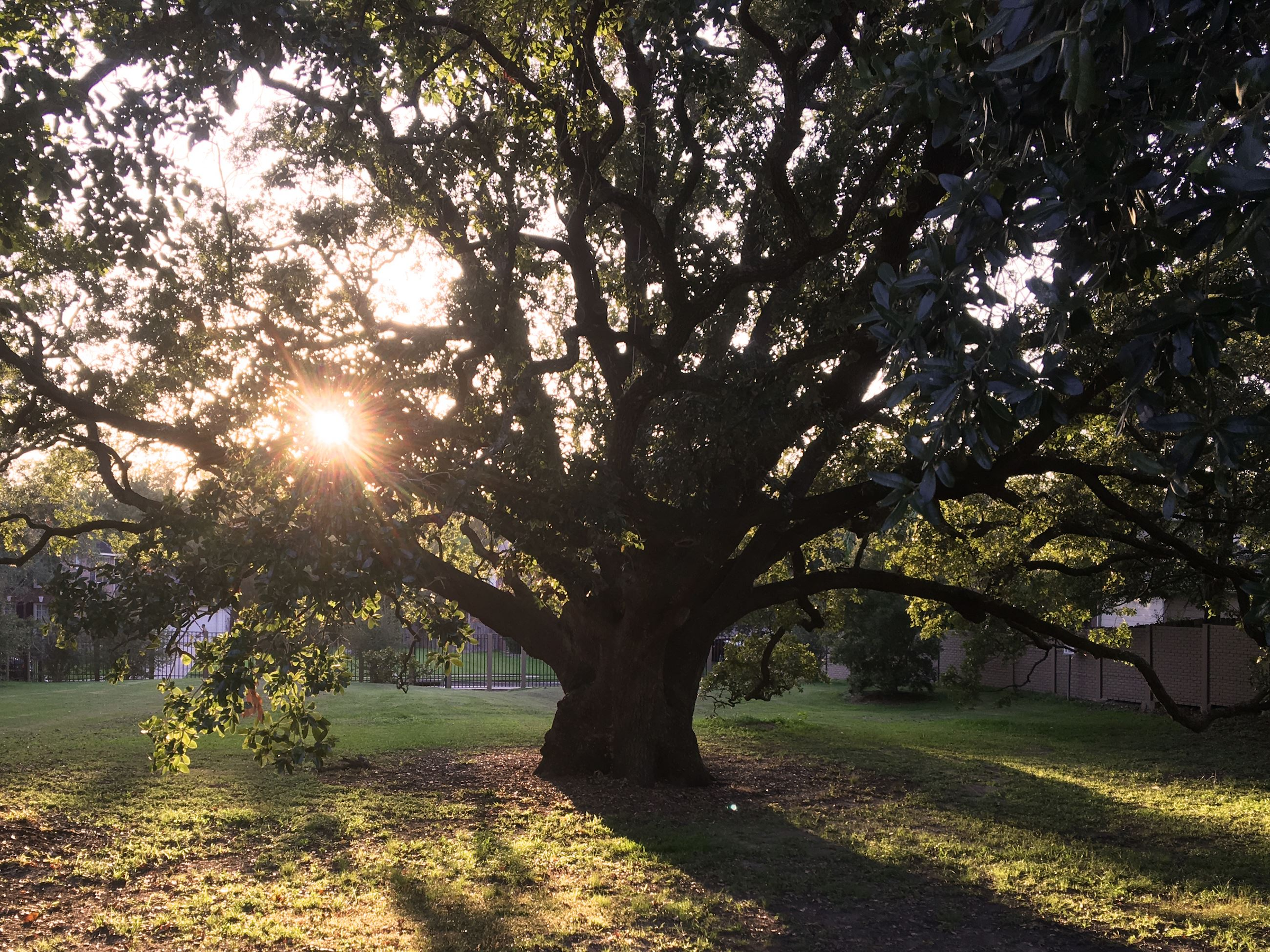
More than two years after President Abraham Lincoln issued the Emancipation Proclamation, Maj. Gen. Gordon Granger issued General Order No. 3 in Galveston on June 19, 1865, announcing that enslaved Texans were free. At Palmer Plantation, the white overseer and Ed Gibbs—formerly Judge Palmer’s driver and a leader among the enslaved workers—gathered the community beneath the live oak and announced their freedom.
Those who remained were offered a share of the crop. That arrangement marked the beginning of legal freedom, but certainly not the end of economic struggle. Freedom had arrived, yet equality would require generations of courage, land stewardship, education, enterprise and determined citizenship.
Councilmember Sharita Thompson, a U.S. Army veteran, said standing where freedom was announced strengthened her commitment to preservation.
“Freedom comes with sacrifice,” she said, adding that the site should help children “learn from it, reflect and appreciate the blessings of liberty.”
Mayor Pro Tem Lynn Clouser described the park as both sanctuary and classroom—a place where families of every race and ability can walk, play and encounter American history. She praised Suber’s monument as a reminder that the story is “more than African American history. It’s American history.”
Councilmember Sonya Brown-Marshall offered perhaps the day’s clearest lesson: Freedom is not self-sustaining. Like the oak, it must be protected, nourished and passed forward. Thompson, Clouser and Brown-Marshall currently serve on the Missouri City Council.
Freedom Tree Park therefore honors more than a tree. It remembers Ed Gibbs and the people who stood beneath its branches as slavery ended on the land. It acknowledges Bettie Palmer, a 14-year-old orphan caught inside one of America’s darkest institutions. And it challenges today’s children to understand that inheritance is not only what we receive—it is what we decide to do with the truth.
Under Missouri City’s blazing sun, the Freedom Tree offered shade. Its history offered something even more valuable: light.
For more information, go to: Freedom Tree Park