Pollard Stands Alone: One ‘No’ Vote, One Big Message on Houston’s $7.5 Billion Budget
Burt Levine | 6/15/2026, 11:10 a.m.
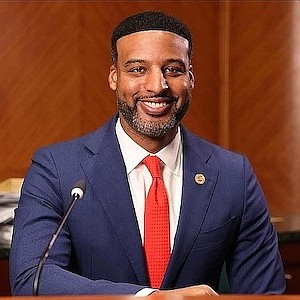
Council Member Edward Pollard
In Houston, everything comes big—our highways, our skyline, our dreams, and, apparently, our budgets. Last week, Houston City Council approved Mayor John Whitmire’s historic $7.58 billion city budget by a 15–1 vote. The plan passed, but the conversation is far from over.
Standing alone in opposition was District J Council Member Edward Pollard, whose “no” vote was not a political whisper. It was a public declaration that City Hall, in his view, must show more discipline with taxpayer dollars.
“A budget is discipline,” Pollard said, arguing that Houston continues to spend more while residents still wait for better streets, reliable trash pickup, fewer water main breaks, and city services that match the taxes they pay. For Pollard, the issue is not whether Houston should invest in itself. The issue is whether Houstonians are seeing a fair return on that investment.
The new budget arrives as Houston faces serious financial pressure and a major deficit challenge. The spending plan includes a new $5 monthly trash and recycling fee expected to appear on residents’ utility bills, along with changes in how solid waste services are funded. Supporters say the fee is necessary to stabilize basic services without raising property taxes. Critics say it asks families to pay more while too many neighborhood problems remain unsolved.
Pollard placed himself firmly in the accountability camp.
“Our city is facing its largest budget deficits ever,” Pollard said, warning that Houston cannot rely on what he called “patchwork” solutions. He expressed concern that moving funds around may help balance numbers on paper, but still leave residents wondering when their streets, drainage, water systems, and trash services will improve.
For many Houstonians, this is not a spreadsheet debate. It is personal. It is the pothole on the morning commute. It is the missed trash pickup on a hot week. It is the water leak that reminds homeowners that infrastructure problems do not fix themselves.
Pollard, a Houston native, attorney, businessman, and product of Houston ISD schools, often speaks about government through the lens of household discipline and business judgment. Educated at Thurgood Marshall School of Law and Harvard Business School, he says public money should be handled with the same care families use when managing their own budgets.
“As a family man and businessman, my conscience can’t allow me to spend the people’s purse with any less discipline than I would my own,” Pollard said.
That message resonated with residents who applauded his stand. It also signaled why Pollard’s name continues to surface in conversations about Houston’s political future.
His vote also comes at a time when voters are increasingly focused on taxes, spending, crime, and public safety. Pollard points to District J as proof that targeted action can deliver measurable results. According to Pollard, crime is down more than 30 percent in his district, compared with a reported citywide decline of about 19 percent. He credits stronger coordination, increased patrols, and focused action in southwest Houston near Beltway 8 and U.S. 59, an area long troubled by prostitution, narcotics activity, and violence.
Pollard said barricades, locked alleyway access, and stepped-up police presence have helped disrupt criminal activity and protect families, businesses, seniors, veterans, and immigrant communities who call southwest Houston home.
This is where democracy earns its stripes. A healthy city does not require every elected official to vote the same way. It requires leaders willing to ask hard questions before the bill comes due. A lone “no” vote can sharpen public debate, demand accountability, and remind taxpayers that representation is not a rubber stamp.
Pollard’s vote did not stop the budget. But it did make Houstonians pause and ask a necessary question: What should residents expect in return for a $7.58 billion investment?
In Houston, where taxpayers know the difference between a promise and a pothole, that question is worth every penny.