Democracy, Justice, and the Responsibility to Remember
Judson W. Robinson III, President & CEO of The Houston Area Urban League | 5/20/2026, 10:13 a.m.
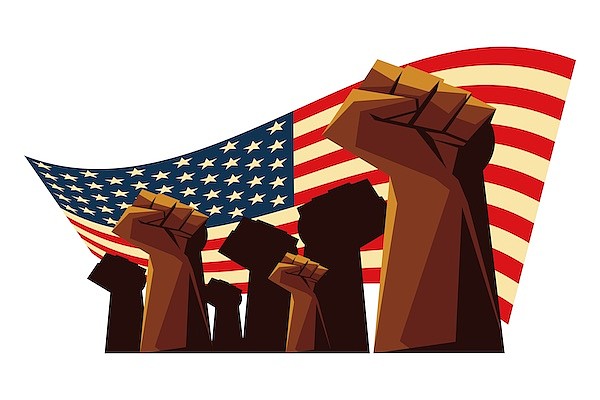
There are moments in American history when silence becomes dangerous.
We are living in one of those moments now.
Across the nation, communities are witnessing a growing assault on civil rights protections, truthful education, voting access, and the institutions designed to safeguard democracy for all people. These efforts disproportionately impact Black and Brown communities but ultimately threaten the democratic foundation of this country itself.
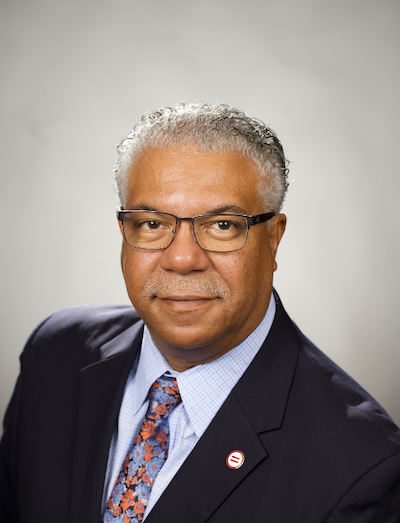 Judson W Robinson, III
President & CEO,
Houston Area Urban League
At the Center for Social Justice and Education, we believe education is not merely about learning facts, it is about understanding truth, preserving history, and preparing citizens to engage responsibly in democracy.
For us, social justice simply means fairness in how people are treated, equal access to opportunity, and the belief that every person deserves dignity, representation, and protection under the law regardless of race, background, income, or zip code. It is rooted in the principle that all communities should have equitable access to education, healthcare, economic opportunity, and civic participation.
That mission has never more urgent.
According to the Equal Justice Initiative’s report, Reconstruction in America, reminds us that after emancipation, Black Americans made extraordinary strides toward political participation, economic mobility, and educational advancement. But those gains were quickly met with violent resistance, voter suppression, racial terror, and coordinated efforts to erase Black political power from American life.
History reveals a painful but undeniable pattern: progress for marginalized communities in America is often followed by organized attempts to reverse it.
“Today, we are witnessing modern versions of those same efforts unfold through legislation, court decisions, disinformation, and divisive public discourse across the country.
In Louisiana and other Southern states, debates surrounding voting access, judicial representation, public education, and civic participation are intensifying. Recent legislation involving judicial restructuring and election systems has raised growing concerns among civil rights advocates about equitable representation and the long-term impact on communities of color.
At the same time, efforts to limit how race, history, and inequality are discussed in classrooms continue to expand nationwide. These attacks on education are not simply political disagreements. They are attempts to shape collective memory , to decide whose stories matter, whose pain is acknowledged, and whose contributions are remembered.
But democracy cannot survive without truth.
When we sanitize history, we deny future generations the opportunity to learn from it. When we discourage civic participation, we weaken public trust. When policies disproportionately silence or marginalize vulnerable communities, we move further away from the ideals America claims to uphold.
The work of social justice is not about division. It is about accountability, fairness, and humanity.
It is about ensuring that children learn a complete and honest history of this nation, including its triumphs and failures. It is about protecting voting rights, so every citizen has equal voice and representation. It is about defending equitable access to education, healthcare, housing, economic opportunity, and justice under the law.
The Houston Area Urban League remains committed to advancing these principles through advocacy, education, workforce development, and civic engagement. But institutions alone cannot protect democracy. Communities must actively participate in preserving it.
We need educators willing to teach truth courageously. We need business leaders willing to stand publicly for equity and inclusion. We need young people to understand that civic engagement is not optional, it is essential. And we need citizens who recognize that democracy requires continual participation, vigilance, and moral courage.
The lessons of Reconstruction remain painfully relevant because America still wrestles with the same fundamental question: Who fully belongs in our democracy?
The answer must be everyone.
Not selectively.
Not conditionally.
Not when convenient.
Everyone.
Future generations will judge this moment not by our rhetoric, but by our willingness to defend justice, truth, and equal opportunity when they were most under threat.
Now is the time to educate.
Now is the time to engage.
Now is the time to protect democracy, TOGETHER!