After blue wave, three-quarters of Americans will be governed by Democrats
Eric Bradner, CNN | 11/10/2026, 2:25 p.m.

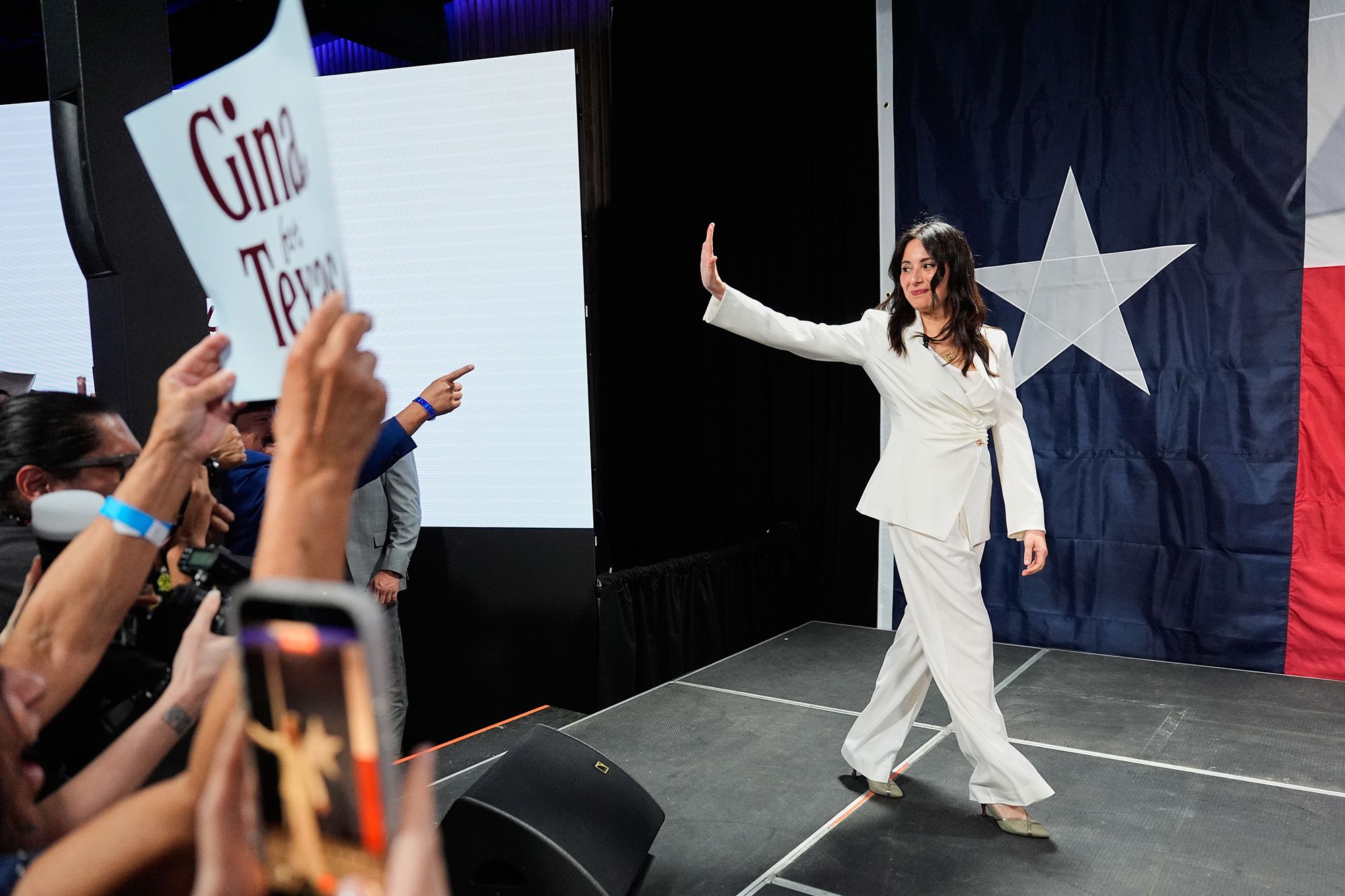
Gina Hinojosa
Brandon Bell/Getty Images via CNN Newsource
As soon as this year’s winners are sworn in, roughly 75% of all Americans will have Democratic governors — a shakeup that reflects the party’s dominance in the nation’s most populous states and could have a seismic impact on everything from redistricting and the Electoral College to health care and tax policies, education funding and more.
In total, at least 28 states will now have Democratic governors. It will be 29 if Democratic state Sen. Cindy Holscher wins the still-uncalled race in Kansas — extending for a third term the party’s governorship of a state that votes reliably red in presidential races. Alaska, where votes are still being counted, could become the 30th Democratic win. Democrats also won several key downballot statewide offices and gained hundreds of seats in state legislative chambers across the country.
“We just delivered a Democratic governor in every battleground state, and we showed people the way — that the right candidate could win in places like Ohio and Iowa,” Kentucky Gov. Andy Beshear, the chairman of the Democratic Governors Association, the party’s campaign arm focused on governor’s races, told CNN in an interview last week.
“I believe that Democrats’ 2028 chances just became significantly, if not exponentially, better,” he said.
Democrats will hold the governor’s offices in 13 of the 14 most populated states — including Texas, the biggest prize of all in the 2026 midterm elections. In addition to the Lone Star State and possibly Kansas, Democrats also flipped the GOP-held governorships in Georgia, Ohio, Iowa and Nevada — and could soon add Alaska to that list.
Republicans retain the job in just one big state: Florida. After that, the next-largest states with Republican governors, by population, are Tennessee, Indiana and Missouri.
Beshear said he expects to see some states that had not expanded their Medicaid programs under the Affordable Care Act seek to do so now, a move that he said would “save rural health care,” as he pointed to 600,000 Kentuckians who gained coverage when he did so there.
“I think what you’ll see is millions of Americans will be able to now go see a doctor when previously in their red-governed state, they couldn’t,” Beshear said.
He also said that unlike Democratic states that successfully sued President Donald Trump’s administration when it sought to cut funding intended to flow to states, Republican-led states did not benefit from court rulings ordering the distribution of money intended to fund AmeriCorps or the Building Resilient Infrastructure and Communities pre-disaster mitigation program.
“One immediate thing that these states will see is millions of dollars flowing into the state that weren’t because their previous governor didn’t have the courage to stand up to Donald Trump,” Beshear said.
The Democratic gains on the statewide level go far beyond governors’ offices.
Democrats picked up more than 500 seats in state legislatures, according to the Democratic Legislative Campaign Committee, the group that leads the party’s national strategy for state-level legislative races.
Democrats will control a majority of state legislative chambers across the country, and in 23 states will hold the majority in both chambers.
The party added six states to its list of “trifectas” — places where Democrats control the governor’s office and both chambers of the state legislature. And all six are presidential battleground states: Arizona, Michigan, Minnesota, Nevada, Pennsylvania and Wisconsin.
It also ended Republican supermajorities in 13 legislative bodies — a critical distinction that means Democrats now have enough seats in those deep-red states to break quorums and grind legislative progress to a halt.
“We’ve been virtually ignored on many of the big issues,” Florida state Rep. Christine Hunschofsky, the incoming House Democratic leader in one of the chambers where the party ended the GOP’s supermajority, said on a call last week organized by the center-left group NewDEAL.
“Nobody needed to bring us to the table. Nobody needed to listen to us,” Hunschofsky said. “And so now, things have changed.”
Edith Jorge-Tuñón, the president of the Republican State Leadership Committee, the party’s state legislative campaign arm, said the outcomes of this year’s elections reflect “the historically difficult political environment Republicans faced and the growing challenge of defending our majorities in the states” — and the reality that the party was likely at its high water mark entering Tuesday in terms of seats and chambers it held.
“In many key battleground states, the national political environment and the impact of top-of-the-ticket races significantly affected our candidates’ ability to defy historical trends,” she said in a statement. “With the 2028 elections and the next round of congressional redistricting approaching, Republicans must confront the challenges ahead and make a sustained commitment to winning back and defending our majorities.”