Thousands of Chase Bank customers report trouble with online banking services
Ramishah Maruf, CNN | 11/17/2026, 12:01 p.m.
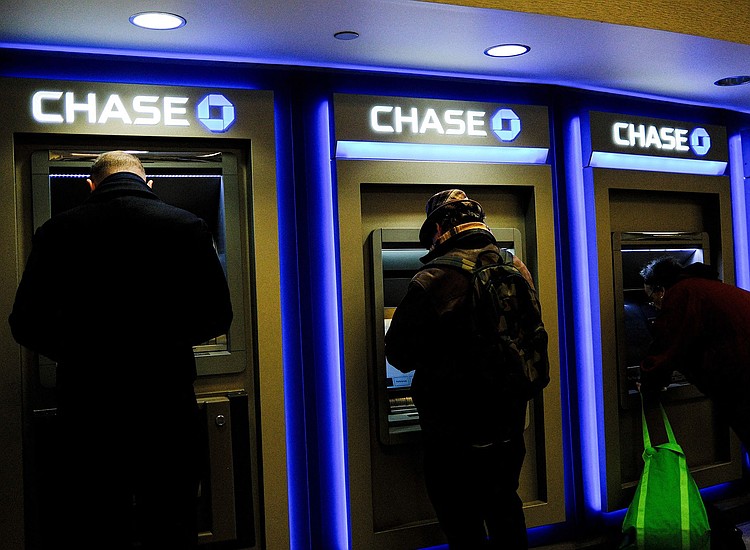
Chase bank
Charly Triballeau/AFP/Getty Images via CNN Newsource
Thousands of Chase Bank customers reported they had trouble using their online accounts on Monday.
“JPMorganChase has experienced a temporary issue related to a software bug,” a spokesperson said Monday. “It is taking longer than usual to service some customers.”
The Chase spokesperson went on to say it was a “bug,” rather than a widespread cyberattack.
Social media users reported issues with transactions at physical Chase branches, as well, and some local bank branches told customers earlier in the day that they were having issues with their internal system. However, Chase said in a statement that “customers still have access to their accounts and funds.”
The outage wasn’t caused by a cloud-related issue or a cyber attack, a source familiar with the matter told CNN. Rather, an update on the company’s own physical computer systems inadvertently caused issues.
As of 2:00 p.m. ET, more than 4,700 customers reported issues with Chase, according to Downdetector.
Customers reported issues at other major banks, including Bank of America, Wells Fargo, and U.S. Bank, though on a smaller scale.
The reports with the other banks appear to be related to sending money through Zelle, a digital payment network, to Chase accounts.
“U.S. Bank systems are not directly impacted. However, clients attempting to send or receive Zelle payments with another financial institution may experience transaction delays,” U.S. Bank said in a statement.
Bank of America also said it was operating normally on Monday.
“Clients experiencing delays with other providers may wish to contact them directly for the latest information,” a spokesperson told CNN.
Zelle said that its service is “operating as it should.” The money-transferring service is owned by a consortium of US banks called Early Warning Services, and Zelle said it does not hold consumer funds.
“An issue at the financial institutions may be impacting broader services, including Zelle payments, for some of their customers,” a Zelle spokesperson said.
Chase also said it wasn’t a systemic issue.
“Other banks may have been impacted by slowness in transactions only to the extent that they were a party to a transaction with us,” the spokesperson continued.
Why systems keep failing
Monday’s Chase outage marked the third straight weekday with a massive technical failure.
On Thursday, a Microsoft outage cut off email access to millions of people across 74 countries and territories. On Friday, a Federal Aviation Administration systems failure led to a nationwide ground stop.
And on Monday afternoon, United Airlines reported a systemwide computer problem that delayed flights.
The incidents don’t share the same scope or root causes. Microsoft blamed a Windows defect, a traffic overload and capacity constraints. The FAA cited a router deployment issue and excessive data flooding its systems. It’s not yet clear what caused the Chase or United outages on Monday.
But the glitches share a common theme: “the complexity and fragility of the systems that we depend on every day,” Mike Chapple, a professor of IT, Analytics, and Operations at the University of Notre Dame, said in emailed comments.
“In each of these cases, what started as an issue in one small part of a larger system quickly spread, causing massive disruptions nationwide,” he added.
Complexity and interdependence aren’t inherently flaws — in fact, they make systems more resilient, noted Rebecca Krauthamer, CEO and cofounder of QuSecure, a cryptography provider for the US government.
“But when dependencies on systems aren’t sufficiently understood, failures can cascade across institutions and industries,” she added.
Think about it like the Titanic: The watertight bulkheads were unable to withstand a failure that exceeded the ship’s architects’ worst-case-scenario assumptions. Even the best-designed systems sometimes succumb to threats and problems that the designers couldn’t have imagined when they built them.
The problem with interdependent technology systems is that system failures are rarely isolated incidents: Our heavy reliance on a handful of systems means failures have tended to bring down systems across the world.
“The question for leaders is not whether one system will fail but how many other things fail with it, and how fast you can contain it,” said Madhu Shashanka, founder of Concentric AI.