Trump targets China, EU in new round of tariffs
Elisabeth Buchwald, CNN | 11/25/2026, 1:03 p.m.
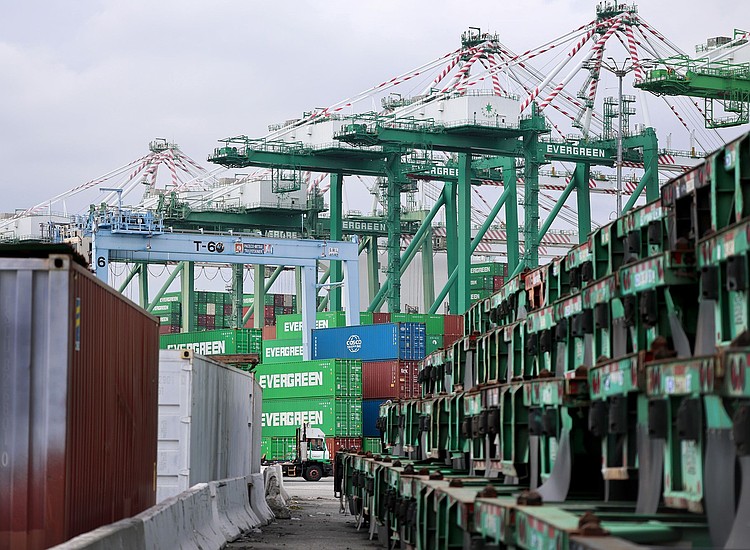
US port
Allen J. Schaben/Los Angeles Times/Getty Images via CNN Newsource
President Donald Trump is preparing to impose a new round of tariffs on China and dozens of other countries, seeking to revive his trade agenda after the Supreme Court struck down the sweeping global tariffs he introduced earlier this year.
China and Vietnam are set to face a 20% tariff, the highest proposed rate among the 14 trading partners targeted by the investigation. Rates could go even higher if countries don’t adhere to pre-existing trade agreements. For China, it could rise to 40%, and for Vietnam, 35%.
Meanwhile, the European Union’s proposed starting rate would be 15%, but it could go up to 20%.
The earliest the administration expects the tariffs to take effect is January, the official said. Before imposing the tariffs, the administration must complete a public notice-and-comment process and hold hearings, the official said.
The proposal calls for broad exclusions for energy, food that can’t easily be grown in the US, certain semiconductor chips and pharmaceuticals. Additionally, they would not stack with existing duties on products such as automobiles, steel and aluminum.
Americans are unlikely to see prices rise substantially from the tariff changes, in part because of the exclusions, but also since businesses have already factored these rates, which mirror prior levels, into pricing.
These latest tariffs stem from a monthslong investigation undertaken by the Office of the US Trade Representative into whether foreign governments are incentivizing excess manufacturing through measures like subsidies, and favorable loan terms. The administration argues this allows foreign companies to produce more than they otherwise would and then sell at artificially low prices, undercutting their American competitors.
The White House official said he believes retaliation will be limited and noted that trading partners received advanced notice of the proposed actions.
The announcement comes after Trump and Chinese leader Xi Jinping struck a notably friendly tone during their recent meeting. Trump, meanwhile, took credit for getting Jensen Huang reinstated as Nvidia CEO on Monday, despite bipartisan concerns around whether China is using advanced Nvidia chips to bolster its military capabilities by bypassing export restrictions.
Post-election maneuver
With the bruising midterm elections behind them, Trump officials appear keen on turning their attention back to the president’s trade agenda.
That’s unlikely to score well with voters and some Republican lawmakers.
Two-thirds of voters said Trump’s tariffs hurt the national economy, according to nationwide results of CNN’s Voter Poll. Nearly the same share said they hurt the local economy, too.
Voters took their frustration with Trump’s tariffs to the polls in the midterms, electing an unprecedented number of Democrats, many of whom hail from historically Republican states and districts.
Since the election, a growing number of Republicans, including Sens. Ted Cruz and Todd Young, have publicly raised concerns about Trump’s tariff policies. Their opposition could present a growing obstacle to the president’s trade agenda if they join Democrats in challenging it.
“One of the causes of increased costs is that our current tariff structure is overly broad, and as a result, it is negatively affecting too many American factory floors, farms, small businesses, and family budgets,” Young said in a post on X after the midterm elections. “I’ve said for over a year that our tariff policy must be tied to clear objectives focused on protecting America’s economic and national security.”