Exclusive: ICE officers can only conduct vehicle stops if they complete certain training, new guidance shows
Michael Williams, CNN | 10/1/2026, 12:37 p.m.
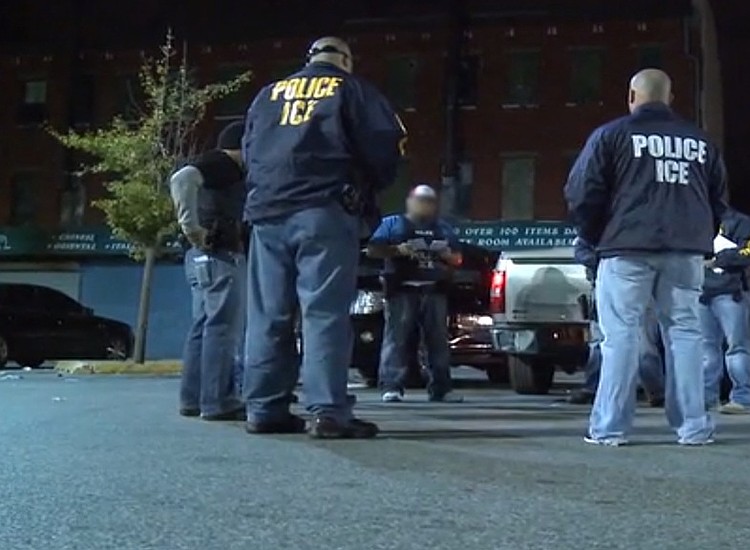
ICE officers
CNN via CNN Newsource
Immigration and Customs Enforcement officers will only be allowed to conduct vehicle stops if they have completed related training courses and must ensure that vehicles used for stops are equipped with lights and sirens, according to new internal guidance reviewed by CNN.
The guidance comes on the heels of multiple controversial vehicle stops that have resulted in fatal, and non-fatal, shootings and against the backdrop of internal tension within the Trump administration over how to proceed with the stops, which the administration considers a key tool as it ramps up immigration arrests.
According to the guidance, only Enforcement and Removal Operations officers, who have “successfully completed” one of six agency training courses, can conduct “traditional vehicle stops, and call-back vehicle stops commonly known as high-risk or felony vehicle stops.”
Those who have not completed one of those courses can only participate in a support capacity.
The guidance states that all officers on scene “must have an agency-issued and activated body worn camera.” It also states that “under no circumstances” are officers authorized to engage in vehicle pursuits in instances where people fail to pull over, but instead to take down information for further investigation.
CNN reached out to the Department of Homeland Security and Immigration and Customs Enforcement for comment.
Earlier this summer, Trump was furious over a pause on most vehicle stops conducted by ICE following fatal shootings in Texas and Maine. The decision to pause those stops, which Trump ultimately overturned, immediately received pushback from his political base, who believed it was a sign of the administration going soft on its immigration crackdown.
The new guidance doesn’t prohibit vehicle stops but lays out who is allowed to participate — and in what capacity — and how to perform them.
The guidance, for example, also weighs in on vehicle stops that involve the pinning of a vehicle and use of tire deflation devices. It describes pinning as using a vehicle or physical barrier to trap or stop a car.
Officers are permitted to pin a vehicle “for the safety of the suspected vehicle and its occupants, the ICE officers engaged in vehicle stops, and other motorists on the roadway.”
Throughout Trump’s second term, vehicle stops have been at the center of several interactions between federal officers and immigrants they are trying to detain, as well as US citizens. Several crashes involving fleeing suspects or protesters accused of “ramming” federal officers have been caught on video.
Earlier this year, a US citizen, Renee Good was fatally shot by an ICE officer in Minneapolis while driving her car and protesting ICE officers. The Department of Homeland Security initially said Good tried to weaponize her vehicle against the officer, but video and witness accounts called into question DHS’ version of events. Good’s family filed two civil lawsuits related to her death on Thursday.
In July, two immigrants, Lorenzo Salgado Araujo in Houston and Joan Sebastian Durán Guerrero in Biddeford, Maine, were fatally shot by ICE officers in separate incidents about a week apart. Those shootings and their fallout prompted DHS to direct ICE officers to briefly suspend most vehicle stops and coordinate more closely with local agencies when executing a criminal warrant on someone inside a vehicle.
And last month, an ICE officer shot and wounded a man from Venezuela who was working as a DoorDash driver in Austin, Texas.