Europe bows to US pressure to release diesel reserves ahead of midterm elections
Kit Maher, CNN | 10/2/2026, 10:44 a.m.
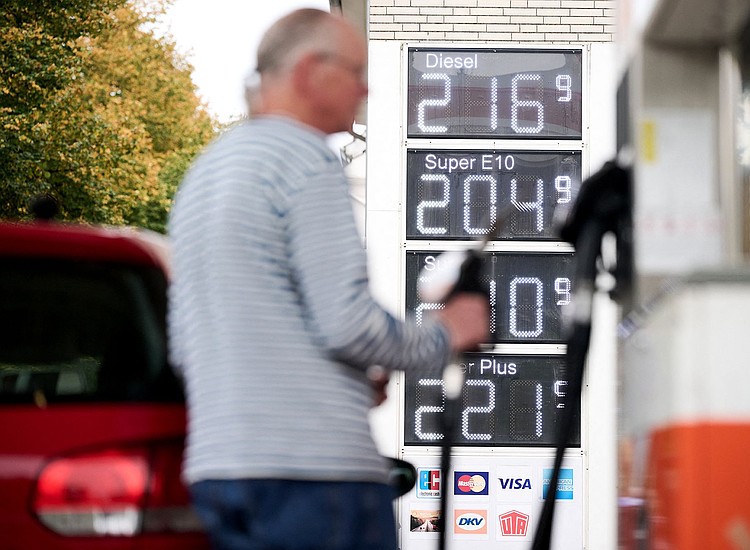
Gas station in Germany
Sina Schuldt/dpa/AP via CNN Newsource
US President Donald Trump announced that Europe has agreed to release “a massive amount of their heavily stocked diesel oil,” following days of pressure to take action to cool surging fuel prices.
“The process will begin immediately,” Trump posted on Truth Social Friday.
European officials held crisis talks earlier on Friday after the US piled pressure on the region to tap into its emergency stocks of diesel – or face a possible ban on US exports of the fuel.
France released a statement announcing the drawdown after chairing a videoconference of G7 leaders.
In a statement, G7 leaders said that they “will implement our commitments” by releasing 100 million barrels over four months, beginning immediately. This includes a “frontloaded substantial diesel release within the first 20 days by G7 members and partners,” the statement read.
The ultimatum from the US administration marked an escalation in pressure on Europe as Trump attempts to bring down US fuel prices ahead of November’s midterm elections
Diesel is the workhorse fuel for the global economy, powering trucks, tractors, freight trains and other commercial vehicles. The US is the world’s largest exporter of the fuel and Trump has touted a ban on diesel exports as a way to boost domestic supplies – and, in turn, bring down prices.
A US diesel export ban would hit Europe – a net-importer of the fuel – hard. But tapping into its emergency reserves risks leaving Europe exposed should supply disruptions from the war in the Middle East and Ukraine continue.
Both US Treasury Secretary Scott Bessent and US Energy Secretary Chris Wright urged European countries this week to release diesel from their stockpiles.
“This is a time for a coordinated release of diesel stores as we go into harvest season, and we go into winter heating oil season. Now is the time to bring more diesel to the market,” Wright told Fox News on Thursday.
The US-Iran war – now in its eighth month – has disrupted flows of crude and refined oil products from the Middle East. While Europe is not currently grappling with outright shortages, global supplies are tight and prices have soared.
US diesel prices have also shot up since the start of the war and, last month, topped $6 a gallon for the first time, according to data from AAA. The average price stood at $6.40 a gallon on Friday morning. Prices fell 5% on Friday in response to news of the coordinated release of reserves.
‘Grappling and fighting’
The threat of a ban on US diesel exports meant Europe had little choice but to comply with US demands, analysts said.
The US is such a critical supplier of diesel to the international market that any ban on its exports would see countries “grappling and fighting over what remains,” said Richard Bronze, Energy Aspects’ co-founder.
Europe’s benchmark diesel prices have more than doubled since the start of the US-Iran war in late February, according to Intercontinental Exchange data.
Worsening the picture is a ban on diesel exports from Russia – which Moscow recently extended until the end of October – following Ukrainian drone strikes on its refineries. As are indications from China that it may tighten restrictions on its oil product exports, said Bronze.
EU member states are required to hold oil stocks equal to 90 days of net imports, but the Commission does not specify how those stocks should be divided between crude oil, jet fuel, kerosene and diesel.
Matt Stanley, head of market engagement at Kpler, highlighted Europe’s dilemma and the risks posed by dipping into emergency reserves in an uncertain geopolitical environment.
“If the underlying disruption continues, you cannot keep drawing inventories indefinitely without eventually creating a much bigger supply problem,” he told CNN.
In March, member countries of the International Energy Agency agreed to release 400 million barrels of oil into the global market – the largest release of emergency oil stocks in history – in response to the US-Iran war.
But the US argued that Europe has not fulfilled its side of the bargain.