A Prostate Cancer Diagnosis Became a Story of Hope for a Houston-Area Man
Lisa Valadez | 9/7/2026, 11:50 a.m.
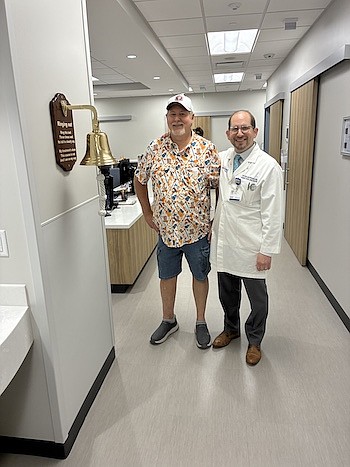
Barry Chautin and Dr Morgan
When Barry Chautin went to his primary care physician for a routine appointment in April 2025, he had no idea the visit would lead to a life-changing cancer diagnosis.
Today, the 66-year-old Houston-area resident is in remission and using his experience to encourage other men to be proactive about their health during Prostate Cancer Awareness Month in September.
Chautin was referred to urologist Dr. Zachary Mucher at Houston Methodist Sugar Land Hospital after testing showed a significant increase in his prostate-specific antigen, or PSA, level compared with the previous year. He was also experiencing difficulty urinating and was unable to urinate, raising immediate concerns.
Initial testing indicated what appeared to be stage 4 prostate cancer with small-cell differentiation, a rare and aggressive form of the disease. The cancer appeared to have spread, and the initial prognosis was extremely serious.
Mucher referred Chautin's case to Dr. Patrick Prath, a medical oncologist, and Dr. Clive Shkedy, a radiation oncologist, both at Houston Methodist Sugar Land. The physicians collaborated on a treatment plan that included chemotherapy, hormone therapy, surgery and radiation.
Chautin was also able to receive radiation treatment closer to home at Houston Methodist Cypress Hospital under radiation oncologist Dr. Peter Morgan, reducing the burden of travel while allowing him to continue receiving specialized care.
During surgery to remove cancer cells and help restore normal bladder function, doctors collected additional tissue samples for testing. The subsequent biopsy produced a different diagnosis: a high-grade prostate carcinoma with neuroendocrine features. The cancer was classified as stage 3 and had spread to nearby lymph nodes.
While the diagnosis remained serious, the revised findings indicated a better likelihood of remission than the initially suspected small-cell cancer.
Chautin responded well to the treatment plan. His most recent PSA test, conducted in May 2026, showed no detectable evidence of cancer.
Along the way, Chautin found an outlet for his experience through woodworking. He began creating custom wooden plaques featuring inspirational poems for the hospital's celebration bells. The plaques became a symbol of encouragement for other patients undergoing cancer treatment.
Eventually, Chautin had the opportunity to ring the bells himself using one of the plaques he had created.
Now, during Prostate Cancer Awareness Month, Chautin is encouraging other men not to put off conversations about their health.
Prostate cancer is the most common cancer among men in the United States, excluding skin cancer, and is the second-leading cause of cancer death among American men. The American Cancer Society estimates that approximately 333,830 men will be diagnosed with prostate cancer in 2026, while about 36,320 are expected to die from the disease. About one in eight men will be diagnosed with prostate cancer during their lifetime.
Risk is not the same for every man. Prostate cancer is more common in Black men, who are nearly 70% more likely to be diagnosed than White men and about twice as likely to die from the disease, according to the American Cancer Society. A family history also can significantly increase risk. Having a father or brother with prostate cancer more than doubles a man's risk of developing the disease.
The American Cancer Society recommends that men discuss prostate cancer screening with their health care providers based on their individual risk. The organization recommends beginning those conversations around age 50 for men at average risk and age 45 for men at higher risk, including Black men and those with a close relative diagnosed with prostate cancer before age 65.
Chautin's experience also highlights why knowing personal risk and having conversations with a physician can be important before symptoms develop.
Houston Methodist physicians encourage men experiencing urinary symptoms, including difficulty starting or stopping urination, weak or interrupted urine flow, or painful or frequent urination, to discuss those symptoms with a health care provider.
For Chautin, a routine appointment ultimately led to an aggressive diagnosis, an intensive treatment journey and, eventually, remission. His experience is now serving as a reminder during Prostate Cancer Awareness Month that men should pay attention to their health and discuss their individual risks with their doctors.