Story
Armed group gathered at Land Run monument to 'keep an eye on the statues'
A Native American sit-in to change or remove the Centennial Land Run monument Saturday morning in Bricktown led to another group arming themselves to "keep an eye on the statues."
Photo
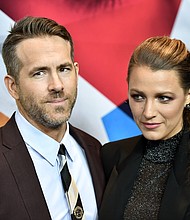
Ryan Reynolds, with wife Blake Lively, says "it's impossible to reconcile" having their wedding at a former South Carolina plantation.
Published on August 4, 2020
Story

Mayor Whitmire Appoints Experienced Leader as City’s Interim Finance Director
Mayor John Whitmire announced today that he has named Melissa Dubowski as the City's interim Finance Director, highlighting his commitment to transparency and tackling the City's financial problems, which will be one of the hallmarks of his administration.
Story
New Orleans Begins Removing Second Confederate Monument
By Madison Park, Keith Allen and Jason Hanna CNN (CNN) -- As police stood between opposing crowds, a crew lifted a statue of former Confederate President Jefferson Davis from its pedestal before dawn Thursday in New Orleans -- the latest in a contentious plan to dismantle four Confederate monuments in the city. The statue, which stood for 106 years, is the second Confederate monument to come down after the New Orleans City Council voted to remove the four landmarks in 2015. After years of heated public debate and legal battles, recent court decisions paved the way for the city to relocate the four monuments. Dozens of people -- a crowd opposed to the monument's removal as well as those backing it -- gathered early Thursday at the Davis statue before the operation began, at times screaming insults and threats at each other. Police separated the sides with barriers. As the statue was lifted shortly after 5 a.m. (6 a.m. ET), those who wanted it removed cheered and sang the chorus from "Na Na Hey Hey Kiss Him Goodbye." One person held a sign that read, "Bout Time." The monument's supporters at that point watched mostly in silence, some holding up Confederate banners. Earlier, some monument supporters chanted, "President Davis," and one man saluted the statue. It wasn't immediately clear how long it would take workers to remove the pedestal. The city government kept quiet about the timing of the removal, citing what it said were threats that some had made toward contractors who would do the work. But word about the plans spread Wednesday when the principal of a nearby school told parents in a letter that she'd been told the removal would happen overnight, and that they should know a street would be blocked off in the morning, CNN affiliate WGNO-TV reported. Part of a larger controversy The New Orleans monuments are part of the larger controversy surrounding Confederate symbols, which some say represent slavery and racial injustice. Supporters say they represent history and heritage. The issue became especially prominent after the 2015 massacre of nine black parishioners in a Charleston, South Carolina, church by a self-described white supremacist. "These monuments have stood not as historic or educational markers of our legacy of slavery and segregation, but in celebration of it," New Orleans Mayor Mitch Landrieu said in a statement released Thursday morning. "To literally put the Confederacy on a pedestal in some of our most prominent public places is not only an inaccurate reflection of our past, it is an affront to our present, and a bad prescription for our future. We should not be afraid to confront and reconcile our past." Jefferson Davis statue dedicated in 1911 The Davis statue stood on top of a roughly 12-foot column and depicted the Confederate president with his right arm outstretched, towering over the street also named after him. Davis lived in New Orleans after the Civil War and died there in 1889. The statue was dedicated in 1911. In 2004, the words "slave owner" were painted on the base of the monument. How they extracted the statue Police had cordoned off the 6-foot tall bronze statue of Davis with a chain-link fence to keep protesters out. Workers wore helmets as well as what appeared to be tactical vests and face masks. Cardboard and tape covered contractors' names on equipment involved in the controversial operation -- the same methods used during the first Confederate landmark removal April 24. Around 4 a.m., two workers approached the Davis statue in a work lift and wrapped part of it in green plastic. They tied the statue's torso with yellow straps, securing it to a crane. One worker dislodged the statue's base from the column using a long flat tool. Two more statues scheduled for removal Last month, the city dismantled the first of its four monuments scheduled for removal -- an obelisk commemorating the Battle of Liberty Place. The monument marked a deadly fight between members of the Crescent City White League, a group opposed to the city's biracial police force, and state militia after the Civil War. The remaining two monuments -- those of Confederate generals Robert E. Lee and Pierre Gustave Toutant Beauregard -- are also scheduled for relocation. Landrieu's office has not revealed when the two remaining statues will come down. The mayor's office said the city has secured private funding to remove the moments. Landrieu said the statues will be put in storage while the city looks for a suitable place to display them, such as a museum. CNN's Nicole Chavez and Emanuella Grinberg contributed to this report.
Story
New Orleans Begins Controversial Removal of Confederate Monuments
In the dark of night, workers wearing masks and tactical vests arrived Monday at New Orleans' Battle of Liberty Place monument to take it down.
Story
“Washington Black” by Esi Edugyan
You need to get out of here. You don’t know where. You just have to go to another room, maybe, or another building, another town, across the world. You need to get out of here but, as in the new novel “Washington Black” by Esi Edugyan, be careful, and mindful that you don’t run away from yourself. Big Kit was going to kill him.
Story
New Orleans Sued Over Planned Removal of Confederate Statue
A divisive statue of Confederate military leader Pierre Gustave Toutant Beauregard won't go down without a legal fight.
Story

The resurrection of Alex Rodriguez
It's hard to believe, but not too long ago Alex Rodriguez was one of the most unpopular figures in sports, and maybe America. He was criticized for poor sportsmanship, faced allegations of being a slumlord, and garnered a me-first reputation.
Story

Black Women Statues Replacing Racist Monuments
As debates over removing racist Confederate statues are getting more heated, two Black women will get their own monuments.
Story
Proposed Alabama Bills Would Protect Confederate Monuments
An Alabama legislative committee has advanced two bills designed to further protect Confederate monuments and criminalize people who attempt to remove them.
Story
Castro to Receive Obiang Nguema Mbasogo Humanitarian Award in Havana
South African Arts International, Ltd, founded in 1994, is proud to announce that the inaugural Obiang Nguema Mbasogo Humanitarian Award will be bestowed to H.E. Raul Castro, President of the Council of the State of Cuba and President of the Ministers of Cuba next week in Havana.
Story
Center extends deadline for rural woman entrepreneur grants
The deadline to apply for a $350,000 grant program that supports women entrepreneurs in rural Texas areas has been extended through June 21.
Video

H-E-B | Our Texas, Our Future Films: Second Chance Trailer
Black bears were driven out of Texas in the early 1900s, but have been making an unprecedented, natural return to their historic habitat since the 1990s. Second Chance profiles the incredible black bear observation & research being done by the Borderlands Research Institute, conservationists, and West Texas ranchers. Learn more at: https://ourtexasourfuture.com/
Photo
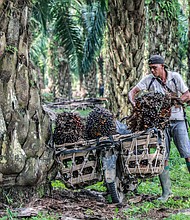
Palm oil prices may go up as Indonesia pans to suspend exports of the oil on Thursday. Pictured is a palm oil plantation in North …
Published on April 26, 2022
Story

Rep. Reynolds files Sugarland 95 Legislation
In 2018, the discovery of an unmarked burial ground at the former Imperial State Prison Farm site in Sugar Land drew national attention to an abhorrent chapter in history. Archaeologists at the site found the skeletal remains of 95 victims of the convict leasing system, which was used after the Civil War to replicate the oppression that existed under slavery. Although the 13th Amendment to the U.S. Constitution prohibited involuntary servitude, it created an exemption for people convicted of crimes. Southern states, including Texas, took advantage by enacting "Black Codes," laws that applied only to African Americans, who could be prosecuted criminally for such offenses as loitering, breaking curfew, or not carrying proof of employment.
Story
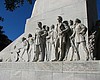
Protesters Rally to ‘Save the Alamo’ Cenotaph
Hundreds reportedly rallied to “Save the Alamo Cenotaph,” a monument which memorializes those individuals who died defending the Alamo in the pivotal 1836 battle of the Texas Revolution.
Story
Here Are the Confederate Memorials That Will Be Removed After Charlottesville
More than 150 years after the Civil War ended, the Confederacy is memorialized with statues, monuments and historical markers across the United States.
Story

This 1880s ghost town is now a luxury resort
Ghost towns don't sound like relaxing destinations to escape from it all, but in the mountains of southwest Colorado, a luxury resort has been created out of a forgotten corner.
Story

Houston native becomes member of elite Navy Honor Guard
A native of Houston, Texas, recently completed an intensive 10-week training program to become a member of the elite U.S. Navy Ceremonial Guard.
Story

State Representative Proposes Paying $95 Million In Reparations To Descendants Of Sugar Land 95
State Representative Ron Reynolds has filed legislation proposing that Texas pays $95 million in reparations to the descendants of 95 African American prison inmates who were forced to work in a Sugar Land plantation while they were serving their time in the 19th century.