Texas Southern University Takes Flight Again with New Twin-Engine Diamond DA42
Francis Page Jr. | 6/8/2026, 5:41 p.m.
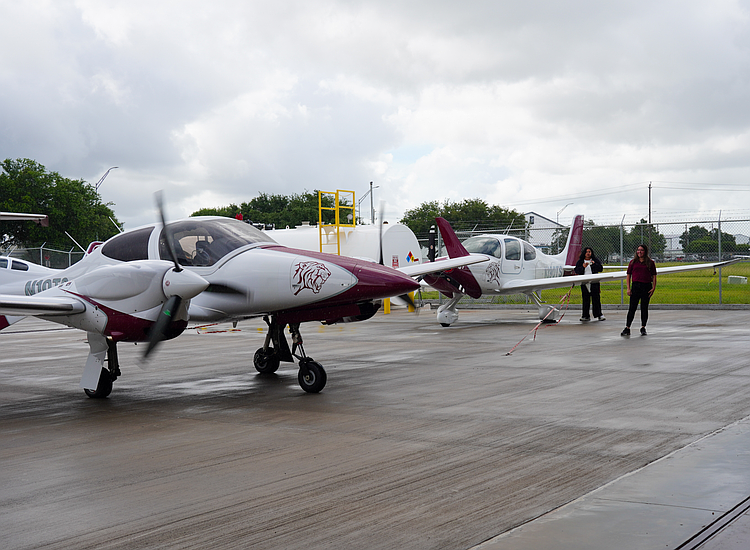
Texas Southern University HSM New Airplane
Houston’s aviation future just gained a little more altitude — and a lot more horsepower.
Texas Southern University’s fast-rising aviation program has welcomed a brand-new 2026 Diamond DA42 twin-engine aircraft, a major milestone that further positions the historic HBCU as one of the nation’s most exciting places to train the next generation of pilots. The delivery marks another proud moment for TSU Aviation, which has been steadily building momentum through new aircraft, new partnerships, and a new home at the Houston Spaceport.
For students, this is not simply another airplane. It is a classroom in the sky — one equipped with modern technology, twin-engine performance, and the advanced systems needed to prepare future aviators for the real-world demands of commercial, corporate, cargo, and aerospace flight.
Dr. Terence Fontaine, Executive Director of Aviation at TSU, called the moment one of the program’s “pinnacle” achievements, noting that while the university has previously had twin-engine training capability, the new Diamond DA42 represents a major technological leap from its older 1980 Seneca II.
And in aviation, a leap like this matters.
Multi-engine training is often the final major step before aspiring pilots earn the Airline Transport Pilot certificate, the credential that opens doors to careers with major airlines. By adding the DA42, TSU is giving its students access to training that is both industry-aligned and future-focused — the kind of experience that helps turn dreams into flight plans.
This new arrival follows an already historic season for TSU Aviation. In April, the university celebrated the opening of its new aviation facility at Houston Spaceport, developed in partnership with the City of Houston and Houston Airports. The facility includes a 20,000-square-foot hangar, 4,500 square feet of classroom and office space, and supports TSU’s expanding aviation and future aerospace engineering instruction.

The university also recently added a fleet of 12 Cirrus SR20 aircraft, strengthening its ability to train students on modern, safety-focused equipment. Together, the SR20 fleet and the new DA42 give TSU one of the most impressive collegiate aviation training platforms in the region.
The climb does not stop there. TSU Aviation has also entered elite pilot pathway partnerships, including programs with Delta Air Lines and Southwest Airlines, helping students connect classroom excellence with career opportunity.
For Houston, this is more than a university headline. It is a workforce development story, an economic mobility story, and a representation story. In an industry where diversity has long lagged behind opportunity, Texas Southern University is building a runway for students who deserve not just a seat on the plane — but a place in the cockpit.
At Houston Style Magazine, we proudly salute TSU for continuing to prove that when investment meets vision, history takes flight. From the Third Ward to the Houston Spaceport, the message is clear: TSU Aviation is not waiting for the future. It is training it.