Commissioner Rodney Ellis Joins Rothko Chapel Conversation on Memory, Memorials, and Houston’s Fight for Racial Justice
Francis Page Jr. | 6/22/2026, 7:11 p.m.

Commissioner Rodney Ellis Joins Rothko Chapel Conversation on Memo
On Juneteenth, inside one of Houston’s most contemplative spaces, the conversation was not simply about what history remembers. It was about what public spaces dare to say out loud.
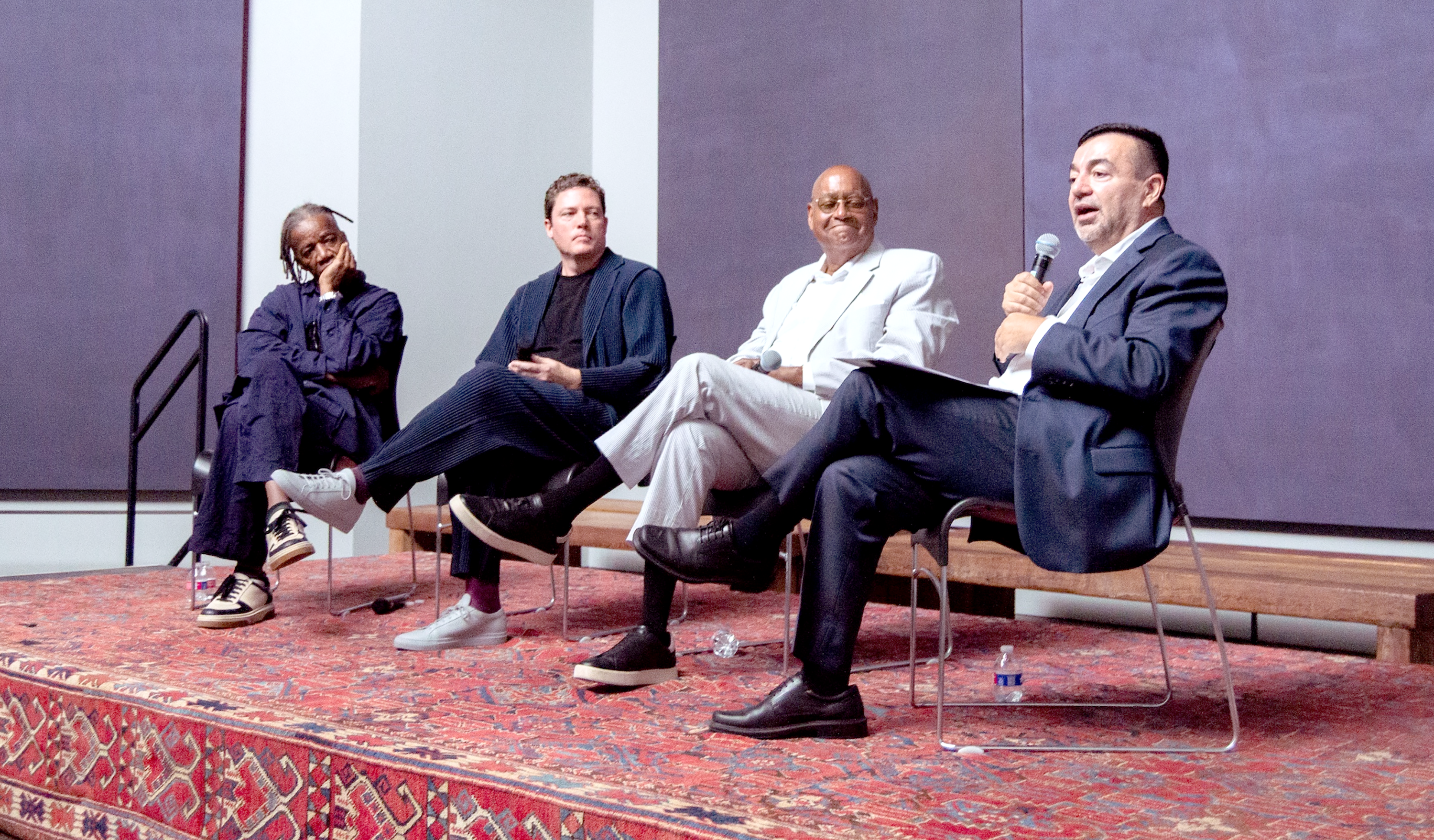
The Rothko Chapel hosted “On Memory & Memorials” on Friday, June 19, 2026, bringing together Harris County Commissioner Rodney Ellis, Rothko Chapel President Imam Abdullah Antepli, architect and author Michael Murphy, and renowned landscape designer Walter Hood for a thoughtful public dialogue on how architecture, landscape, education, and memorialization can help communities confront racial injustice.
The timing could not have been more powerful. Held on Juneteenth, the conversation arrived one day before Commissioner Ellis’ public unveiling of plans for downtown Houston’s Remembrance Park, a future civic space designed to honor African American resilience, truth-telling, and the unfinished journey toward justice.
Moderated by Imam Abdullah Antepli, the panel moved with the kind of moral clarity that has long made Rothko Chapel more than a quiet room with famous paintings. It is a sanctuary for reflection, yes, but also a civic stage where conscience gets a microphone. Founded by Dominique and John de Menil and dedicated in 1971, the Chapel has built a national reputation as an interfaith, nonsectarian space where spirituality, art, dialogue, and human rights meet without needing a translator.
Commissioner Ellis, a longtime civil rights leader and public servant, placed the discussion firmly in Houston’s living reality. Public memory, he suggested, is not decorative. It is instructive. It asks a city to look at itself honestly, not to remain trapped by the past, but to move forward with greater purpose. In a region as diverse and fast-growing as Harris County, the question is not whether public spaces carry meaning. They always do. The question is whose stories are centered, whose pain is acknowledged, and whose future is invited into the design.
Michael Murphy, founder of AMMA and former co-founder and CEO of MASS Design Group, brought the architect’s lens to the conversation. His work has explored how buildings influence behavior, health, dignity, and community life. At Rothko Chapel, Murphy’s presence underscored a central idea: buildings are not neutral. They either reinforce silence or create room for truth. When designed with moral imagination, architecture can become a form of public education.
Walter Hood, MacArthur Fellow and founder of HOOD Design Studio, widened the frame through landscape. Hood’s work reminds us that land itself holds memory. Trees, pathways, gathering spaces, shade, water, and native plantings are not merely beautification tools. They can be instruments of healing. In the right hands, a park becomes more than grass and benches. It becomes a classroom without walls, a sanctuary without pews, and sometimes, a mirror a city has avoided for too long.
That is what makes Remembrance Park such a consequential project for Houston. Planned for downtown near Buffalo Bayou and Quebedeaux Park, the space is expected to include historical markers honoring Harris County victims of racial terror lynching. For generations, these stories were too often omitted from public view. Naming them now is not about reopening wounds for spectacle. It is about refusing to let silence masquerade as peace.
The panel also spoke to a larger Houston truth: our city knows how to build. We build medical centers, highways, stadiums, campuses, neighborhoods, and skylines. But the deeper civic challenge is learning how to build memory with the same ambition. A city that remembers honestly can govern more justly, educate more fully, and welcome more generously.
For Houston Style Magazine readers, this conversation reflected the best of what civic leadership and cultural institutions can do together. Commissioner Ellis brought public purpose. Rothko Chapel brought sacred space. Imam Antepli brought bridge-building dialogue. Murphy andHood brought design brilliance rooted in justice. Together, they offered Houston a blueprint for remembrance that is neither frozen in grief nor afraid of accountability.
And that may be the most hopeful takeaway: memory, when handled with care, does not keep a city stuck. It helps a city grow up.
In a Houston that continues to expand, diversify, and redefine itself, “On Memory & Memorials” reminded us that progress is not only measured by cranes in the sky. Sometimes, progress looks like a community sitting together at noon on Juneteenth, facing hard history, and deciding that the future deserves more truth, more beauty, and a whole lot more courage.
For more information, visit Rothko Chapel and the Office of Harris County Commissioner Rodney Ellis.