Trump signs executive order aimed at lowering diesel prices
Matt Egan, CNN | 10/6/2026, 8:43 a.m.
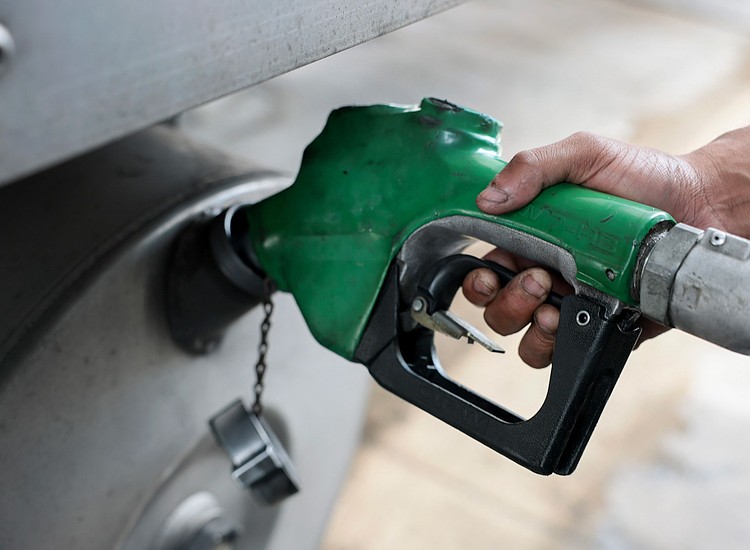
Diesel fuel
Joe Raedle/Getty Images via CNN Newsource
President Donald Trump signed an executive order late Monday aimed at bringing down near-record diesel prices by waiving restrictions on cheaper red-dyed diesel.
The order, unveiled at a campaign event in Nebraska, a state hit hard by the spike in diesel prices, amounts to a pre-election tax holiday.
Red-dyed diesel is the same as regular diesel. It’s just untaxed and dyed red to distinguish it for off-road use only, such as for tractors or industrial purposes.
Allowing broad use of tax-exempt diesel could be especially helpful for truckers grappling with a historic spike in diesel set off by the war in Iran and amplified by attacks on Russian refineries and export restrictions in China.
The diesel move could also help farmers who rely on trucks to deliver their goods to market and to receive fertilizer and other supplies.
“For many years, farm vehicles, construction equipment and other off-road vehicles have used what’s known as red-dyed diesel. You know what that is? I don’t know what the hell it is, but whatever it is, it is supposed to be very good,” Trump said, before adding it’s “exactly the same as normal diesel.”
According to a fact sheet released by the White House, the order will “temporarily allow off-road ‘dyed’ diesel for highway use and defer the applicable Federal excise tax, lowering costs for Americans.”
The executive order instructs the Internal Revenue Service to waive penalties on ‘dyed diesel’ for highway use through the end of the year.
The catch is the tax obligations don’t go away completely, they are just deferred until next year. However, the order instructs officials to explore ways to forgive the tax obligations, including potentially legislation.
The order also instructs administration officials to encourage more states to adopt similar policies and to ensure farmers have access to dyed diesel in high-demand areas.
Diesel prices skyrocketed from $3.76 a gallon before the Iran war to a record of $6.53 a gallon on September 22, according to AAA. The national average price for diesel on Tuesday was $6.32 a gallon.
Normally, diesel for on-road use is taxed at 24.4 cents per gallon by the federal government. Diesel also faces state taxes, which average 35.5 cents per gallon, according to federal data.
States have already been taking matters into their own hands to help truckers cope with high diesel prices.
Between September 23 and October 2, 10 states — including Texas, Oklahoma, North Carolina and Alabama — have taken steps to boost access to dyed diesel for use in highway vehicles, according to a tally from research firm ClearView Energy Partners. Those 10 states make up about a third of diesel sales.
The White House said the administration and state governors can “exercise their enforcement discretion” to halt inspections and waive tax liabilities normally linked to on-road use of dyed diesel.
A trucker filling up an 18-wheeler with 250 gallons of diesel is currently paying about $1,575 per fill-up. That cost could fall by about $150 if truckers can use diesel that does not face federal and state taxes.
“It’s a Band-Aid,” said John Tirado, who runs a trucking company in New Jersey and is founder and president of fuel supplier Summa Energy. “And it comes late. Prices have been climbing since March…This helps with the next fuel bill, not the last seven months.”
It’s also not clear whether the savings for truckers will get passed along in part or entirely to consumers.
“It’s not really a needle-mover,” said Patrick De Haan, head of petroleum analysis at GasBuddy, an app that tracks fuel prices.
De Haan cautioned that making dyed diesel more available is easier said than done, given the fluid situation and the various state lines truckers cross.
“Washington is great at making something sound easy that is not. Just because you’re allowing something to happen, doesn’t mean it will,” De Haan said. “This won’t fix the problem overnight, but it can allow politicians to take a bit of a victory lap.”
“We’re not going to need it long, I hope, we’re not going to need it long because your prices are plummeting and they’re going to really be plummeting,” Trump said.
Even though diesel prices have retreated about 20 cents from the recent peak, diesel has still skyrocketed about 77% this year, leaving it on track for the biggest annual percentage increase since AAA started tracking in 2000.
Of course, suspending taxes on fuel does not change the main problem: The world is facing a major refinery shortage.
Refineries in the Middle East and Russia have been damaged by war. Making matters worse, China is holding back fuel exports to avoid a shortage at home.
Refineries in the United States are attempting to bridge the gap, but they’re already running as hard as they can.
“This does save the consumer money in the short term, but it doesn’t solve the underlying issue,” said Andy Lipow, president of Lipow Oil Associates.
Over the weekend, Ukrainian President Volodymyr Zelensky vowed to double down on his country’s punishing attacks on Russian oil refineries.
“For Ukraine, this is an existential threat. The only way to bring Moscow to the table is to destroy the Russian refinery system,” Lipow said. “I expect the drone attacks to continue.”