End of an Era, Dawn of the Future: Tesla’s Bold Pivot Redefines Mobility
Francis Page Jr. | 4/7/2026, 11:30 a.m.
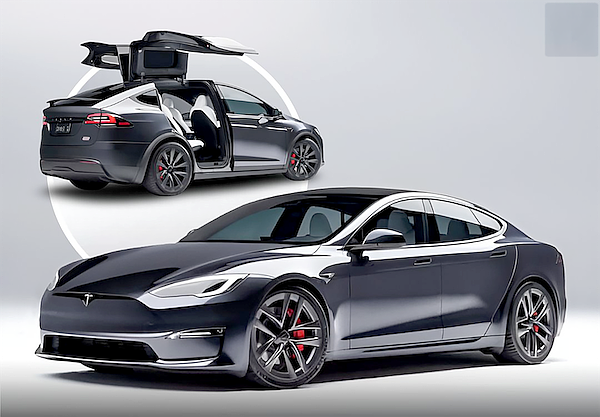
Tesla Models S and X
In a move that signals both reflection and reinvention, Tesla has officially confirmed the end of production for its iconic Model S sedan and Model X SUV. For over a decade, these two trailblazing vehicles didn’t just redefine electric driving—they reshaped the entire automotive industry.
First introduced in 2012 and 2015, the Model S and Model X became symbols of innovation, luxury, and environmental progress. They proved that electric vehicles could be fast, stylish, and desirable—turning skeptics into believers and positioning Tesla as a global leader in clean transportation.
Under the leadership of Elon Musk, Tesla didn’t just build cars—it built a movement. And the Model S and X were its flagship ambassadors.
A Strategic Shift Toward the Future
While the curtain closes on these premium models, the spotlight is shifting to what lies ahead. Tesla’s decision reflects a broader, forward-thinking strategy—one that prioritizes scalability, artificial intelligence, and next-generation mobility.
With consumer demand increasingly favoring high-volume vehicles like the Model 3 and Model Y, Tesla is streamlining its production to focus on technologies that promise even greater impact. The transition isn’t a retreat—it’s a recalibration toward innovation at scale.
The company is doubling down on AI-driven advancements, autonomous driving systems, and robotics—industries poised to redefine how people and goods move in the coming decades.
The Rise of AI, Robotics, and Autonomous Mobility
Tesla’s future roadmap reads like a page from science fiction—except it’s rapidly becoming reality.
At the center of this transformation is the Optimus humanoid robot, which Tesla aims to produce at massive scale. Designed to assist in everything from manufacturing to everyday tasks, Optimus represents Tesla’s expansion beyond vehicles into the broader AI ecosystem.
Equally groundbreaking is the introduction of the Cybercab, a fully autonomous vehicle designed without a steering wheel or pedals. Expected to retail at approximately $30,000, this innovation could democratize transportation while reshaping urban mobility.
Behind the scenes, Tesla’s Terafab AI chip initiative is set to power the next generation of intelligent systems. These advanced AI5 chips will enhance everything from vehicle autonomy to robotics—cementing Tesla’s role not just as an automaker, but as a technology powerhouse.
What This Means for Houston and Beyond
For Houston Style Magazine readers—and a city deeply connected to energy, innovation, and global industry—Tesla’s pivot carries powerful implications. As the world transitions toward cleaner, smarter technologies, Houston stands uniquely positioned to lead in infrastructure, workforce development, and next-generation energy solutions.
Tesla’s evolution mirrors a broader shift happening across industries: the fusion of technology, sustainability, and human ingenuity. It’s not just about cars anymore—it’s about ecosystems.
A Legacy Worth Celebrating, A Future Worth Watching
The Model S and Model X may be driving into the sunset, but their legacy is permanently etched into automotive history. They paved the road for electric adoption, inspired competitors, and proved that bold ideas can transform entire industries.
Now, Tesla is once again pushing boundaries—this time into AI, robotics, and autonomous mobility.
For Houston and the world, one thing is clear: the journey is far from over. In fact, it’s just getting started.