As SEC football media days begin, the specter of recent Big Ten dominance looms
Dana O’Neil, CNN | 7/21/2026, 2:06 p.m.
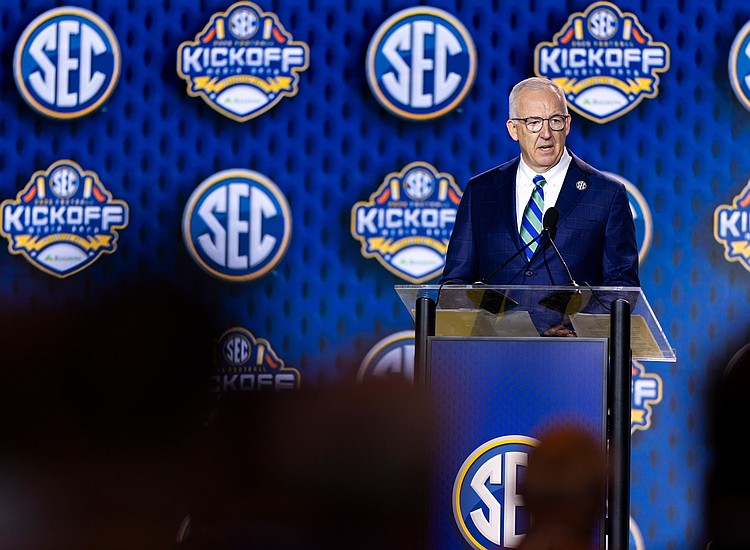
Greg Sankey
Parker S. Freedman/Getty Images via CNN Newsource
Around the same time Rodri carried the World Cup trophy down the plane steps and onto Spanish soil, Oklahoma’s Brent Venables stepped to the podium inside a conference room at the Tampa Marriott, the first coach scheduled to speak at the SEC’s football media days.
Goodbye fútbol, hello football.
Unintentionally timed, it was nonetheless a well-choreographed calendar flip. The SEC, of course, is the league that bills itself as college football royalty, the one where even the conference room WiFi password exalts its praises: 2026IJMM, as in It Just Means More.
It still means more, evidenced by the logoed fans who gathered outside the SEC Network set to rally for what is essentially just a bunch of press conferences. Actual kickoff is still a good month away but there stood folks in team gear, raring to get things going.
Except the brash arrogance that long lived behind the slogan has taken a bit of a hit in recent years. It may still mean more in the SEC, but the league is achieving less. Commissioner Greg Sankey used his opening remarks to tout the league’s achievements.
“Southeastern Conference football remains the second most-watched sports property in the United States, trailing only the National Football League,’’ he said, going on to add, “Our football programs draw an average of 80,000 fans per game. That’s our average number. This was the stat of my summer. That is the highest average attendance of any sport in the world.’’
He also made mention that the SEC had won 13 national championships this past school year, topping its previous record of 10.
What he failed to mention is that for the third consecutive season, the championships did not include football, the league’s longest drought since 1999 through 2002. And while it might mean more across the SEC, it means most on the football field.
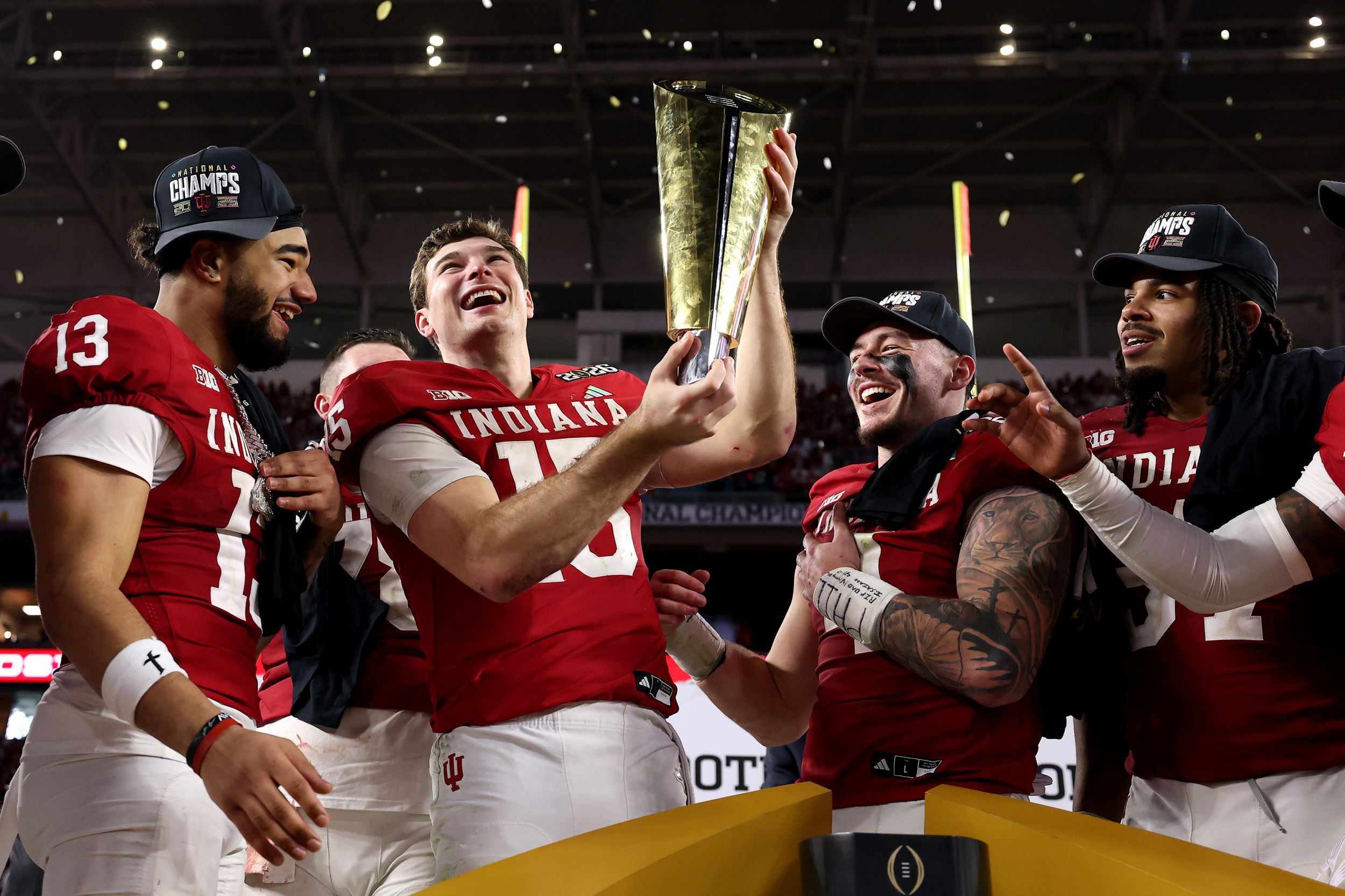
The Big Ten, meanwhile, has waltzed into the SEC abyss. Its pockets lined via an absurdly rich media-rights deal and its geographic footprint spreading from coast to coast, the Big Ten is in near-football takeover mode. It may never complete an entire cultural shift, with the South’s devotion to college football remaining unsurpassed, but it has wrested control where it matters – with trophies.
The Big Ten has won the last three national titles, spreading the wealth among three different teams. In head-to-head matchups with its conference rivals, the league is 4-0 over the last three seasons.
The Big Ten also leads in the all-important financial ledgers when money matters to everyone. In his opening remarks, OU’s Venables thanked not only his fans but his “donor base,’’ and referred to Sooners defensive lineman Taylor Wein as “one of the lowest-paid guys on our roster.’’
Yet the Big Ten is even bankrolling better. The SEC topped $1 billion in earnings for the first time last year. The Big Ten replied with a ‘hold my beer,’ generating $1.74 billion. It has also mobilized its powerful alumni, calling on the likes of Mark Cuban (Indiana), Larry Ellison (Michigan) and the OG NIL booster Phil Knight (Oregon) to use their wallets to display their school pride.
Kevin Warren, whose departure from the Big Ten to the Chicago Bears was largely greeted with a ‘don’t let the door hit you,’ negotiated not just the critical TV deal but also led the Westward Ho expansion that has expanded the Big Ten footprint from coast to coast. Coupled with Oregon’s on-field success (one CFP quarterfinal berth, followed by a semifinal spot in its two years), it’s all added up to a solid foundation that shows no signs of weakening.
Make no mistake. In a dwindling list of haves, the SEC very much remains a powerbroker. Sankey peppered his opening remarks with the league’s stance on Congressional involvement in college football, and his belief that the NIL field is in desperate need of transparency. And when asked specifically if there were ever real talks about the league essentially seceding from the NCAA model, answered pointedly. “So they’re real,’’ he said. “People have talked about that. They’ve opined about the frustrations that bring them to the point of saying we should look at something different. I do not believe that is a leverage point. I think that’s just honest communication.’’
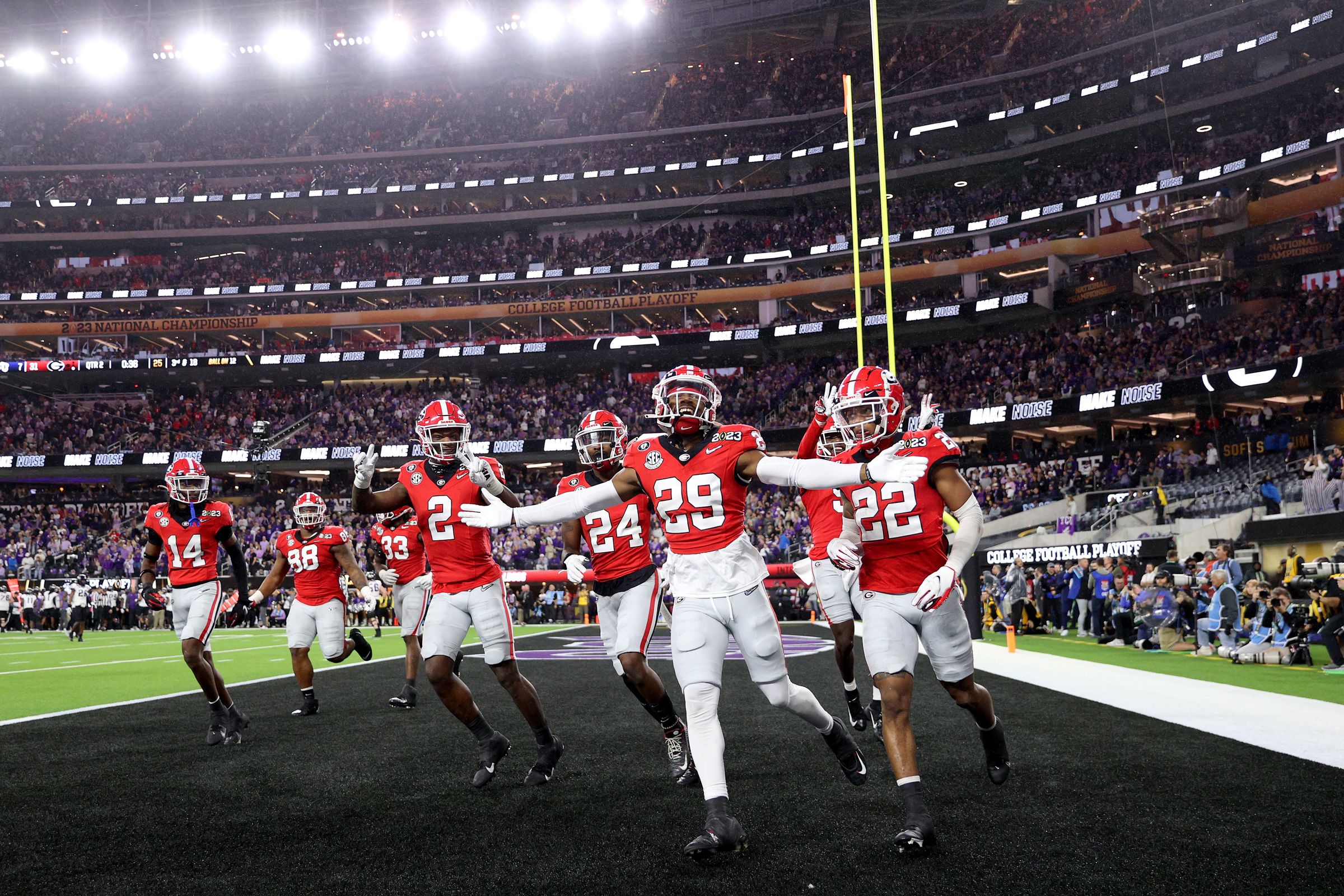
But if we’re talking honestly about leverage, it’s only reasonable to point out that the SEC currently, at least, has less. And perhaps the biggest issue in this SEC identity crisis: there are no assurances that this is just a temporary blip.
Without sounding overly dramatic, this could very well be the start of a critical transition for the SEC. One by one, the coaches here will take to the podium, wearing suits with their appropriate team-colored ties, to lay out their case for the season. There are six* new ones - Alex Golesh at Auburn, Jon Sumrall at Florida, Will Stein at Kentucky, Ryan Silverfield at Arkansas, Pete Golding at Ole Miss and Lane Kiffin* at LSU (the Kiffin asterisk denotes new to Baton Rouge, but not, clearly, to the SEC), and if there is a true cause and effect to explain both the SEC’s past struggles and lay out its future dynamics, it’s at the head coach’s table.
It is no coincidence that the SEC’s slight dip coincides with the retirement of Nick Saban and the precipitous falls in some of the league’s traditional power bases. Once the bulwark of the SEC’s might, Auburn has suffered through five losing seasons and has averaged 6.9 wins per year since its 2013 national title. Florida, winners of two national titles under Urban Meyer, has churned through four head coaches since, none finishing higher than sixth in the nation.
This time last year, in the beautiful void before actual games were played, 10 SEC teams debuted in the preseason top 25. Two (LSU and Florida) wound up firing their coaches; one (South Carolina) won one league game; and another (Tennessee) stumbled out of the rankings.
In the meantime, Indiana mined a diamond out of a pile of obscurity. On the final day of the season, Curt Cignetti stood amid the red and white confetti and lofted yet another trophy for the Big Ten.
“The ability to hold a national championship trophy up, compete against colleagues from different states in an equitable fashion, and achieve the mountaintop of a national championship, that has meaning,’’ Sankey said.
It in fact, doesn’t just mean more. It means everything.