Trump’s tariffs are back in court — again
Elisabeth Buchwald, CNN | 9/30/2026, 12:11 p.m.
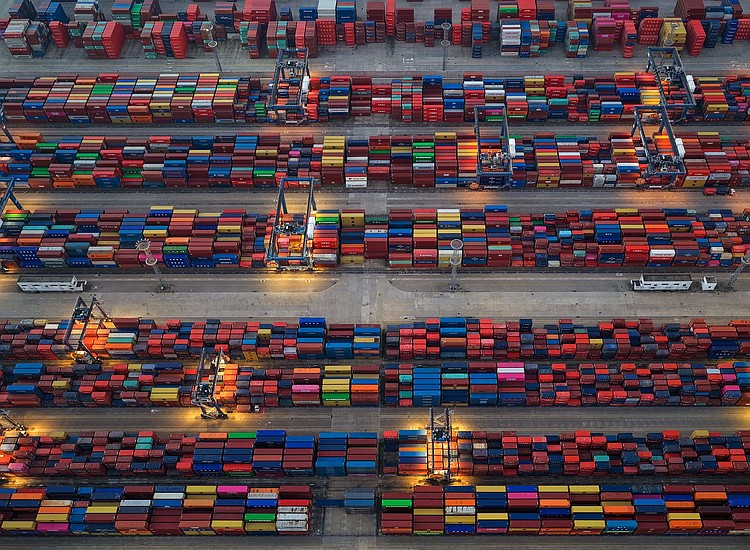
China port
AFP/Getty Images via CNN Newsource
Here we go again: President Donald Trump’s sweeping global tariffs are back under the legal microscope.
On Wednesday, a three-judge panel at the US Court of International Trade is set to hear arguments in a case that could determine whether the president can use a 1970s trade law to impose tariffs on nearly everything the United States imports.
Since late July, goods from 80 countries, including China, India and Japan, have faced tariff rates ranging from 10% to 12.5%. The administration imposed the duties after determining that those countries had allegedly failed to address the use of forced labor in producing goods shipped to the US. The US Trade Representative recommended the tariffs as a remedy, with higher rates applying to countries deemed the “worst offenders.”
The rollout of these tariffs coincided with the lapse of a separate 10% near-blanket duty Trump had imposed earlier in the year under a different legal authority. The Supreme Court later ruled that Trump had overstepped his authority, which immediately invalidated the tariffs and triggered $168 billion worth of refunds for importers.
The complaint, filed by the Liberty Justice Center, a libertarian public-interest law firm that successfully won the landmark Supreme Court tariff case, argues that the administration is moving to preserve a predetermined global tariff policy. That, they argue, is an improper use of the trade law commonly referred to as Section 301.
Administration officials, meanwhile, told reporters previously that the timing was to “avoid complexity” that would come from layering the new levies on top of the then-10% duties.
“The real message here that everyone needs to take away is the president is going to always use the tools at his disposal to achieve his trade policy objectives,” administration officials said on a briefing call with reporters shortly before the 10%-15% duties took effect.
While Wednesday’s arguments may offer clues about how the judges view the case, a ruling could still take weeks — if not months. Either side could then appeal the decision to the US Court of Appeals for the Federal Circuit, which could also decide whether to pause enforcement of the tariffs while the case proceeds.
The fight could eventually reach the Supreme Court, extending the legal battle for several months more.
By the time it concludes, Trump may have already enacted a slew of new duties. Already, there are several pending Section 301 investigations that are widely expected to lead to higher border taxes. Beyond that, Trump has also tapped in to a Great Depression-era trade law to impose 50% duties on $20 billion worth of goods from Canada and issued widespread import bans from there.