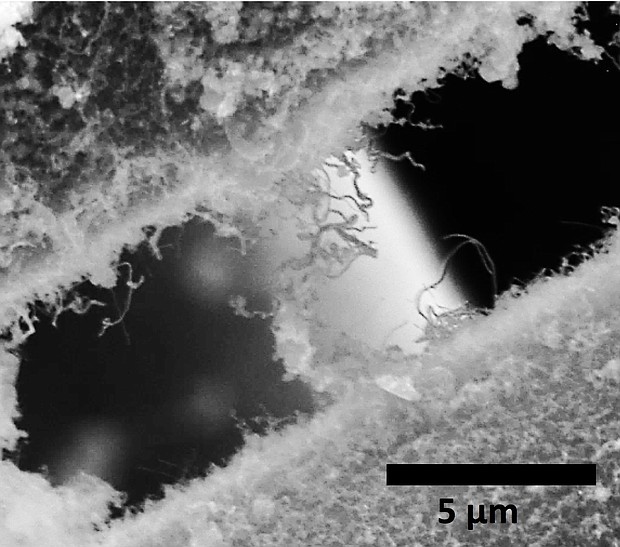
Silicon carbide nanotubes attached to separate silicon carbide fibers, used by NASA, entangle each other in this electron microscope image. The material created at Rice University is intended for a ceramic composite that would make rocket engines stronger, lighter and better able to withstand extreme heat. (Credit: Ajayan Research Group/Rice University)
Stories this photo appears in:
'Fuzzy' Fibers Can Take Rockets' Heat
Rice University researchers create tough material for next generation of powerful engines
To stand up to the heat and pressure of next-generation rocket engines, the composite fibers used to make them should be fuzzy.