Takeaways from Supreme Court arguments in major climate change case against Big Oil
John Fritze, CNN | 10/5/2026, 4 p.m.
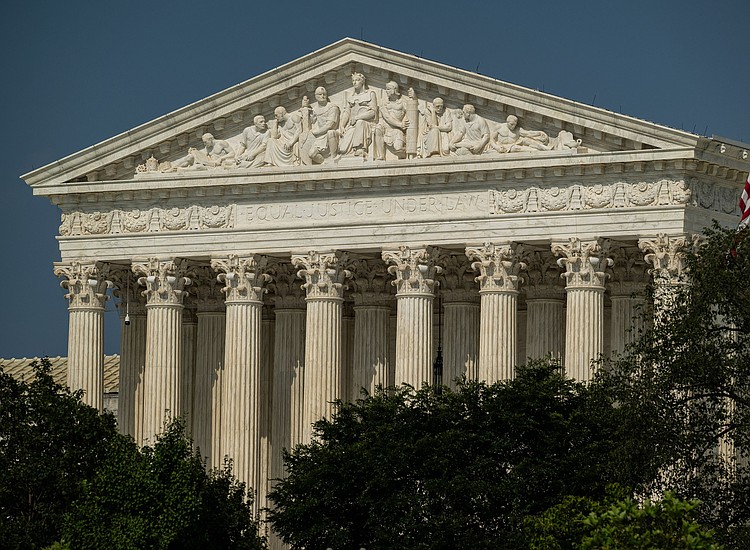
The US Supreme Court in Washington, DC, on July 20.
Graeme Sloan//Bloomberg/Getty Images via CNN Newsource
The Supreme Court appeared conflicted Monday about how it will resolve a lawsuit from a Colorado city that is attempting to hold two fossil fuel companies responsible for the impacts of climate change, though several conservative justices said they were concerned about the possibility of letting states wade into an area long controlled by the federal government.
As they opened a new term with the most important climate change case to reach their docket in nearly two decades, the conservative justices asked especially probing questions for the city and county of Boulder, which wants billions of dollars to help mitigate the cost of fires, floods and public health impacts associated with a warming climate. They also asked tough questions of the two oil companies, ExxonMobil and Canada-based Suncor Energy.
Dozens of other cities have filed similar suits against oil and gas companies. A decision is expected next year.
Here’s what to know about the oral arguments:
Kavanaugh says Boulder has hit a ‘wall’
Justice Brett Kavanaugh, a conservative who at times finds himself siding with liberals in a majority, offered the clearest opposition to Boulder. At one point he mused that the approach the city and county had taken in the litigation would “bankrupt” not just oil companies but potentially other businesses as well.
Exxon and Suncor argued that the regulation of carbon emissions is inherently a federal issue, since pollution can waft across state and international borders. Kavanaugh repeatedly latched onto that argument, calling attention to past precedents in which the Supreme Court seemed to agree.
“We’re on a wall of precedent that says state tort law does not apply,” Kavanaugh said. “This court would be rightly accused of misleading Congress for decades on what the state of the law was,” if a majority was to conclude that states and cities could bring such suits against polluters.
Chief Justice John Roberts seemed particularly concerned with the implications of letting each individual city and state sue.
“Presumably, if you prevail, the next day a municipality in every single state will file a lawsuit — probably copy your pleadings — and then there’ll be at least 50 different cities,” Roberts, a conservative, asked the attorney for Boulder. “How would you think that will work out on the ground?”
Kevin Russell, the lawyer for Boulder, countered that the court had never deferred to federal law before just because of the possibility that a state action “if copied in other states, could cause a lot of litigation.”
But Roberts also seemed to be troubled with some of the most sweeping arguments embraced by Exxon and the Trump administration, which is backing the oil companies.
“There are a lot of familiar situations where conduct outside of a state has broad effects in other states … and yet we allow the state courts in a particular state to bring litigation,” Roberts said at one point. “I guess I’m not quite sure what makes this situation different from all those other ones.”
Comparison to landmark tobacco case
This is the latest in a series of high-profile appeals in which both liberal and conservative states are attempting to adopt policies in a vacuum of action from a gridlocked Congress. Groups supporting Exxon warned of “runaway” litigation in which states sue to try to set national policy in a range of other areas, from food production to pharmaceuticals to artificial intelligence.
Boulder says its suit is similar to those filed by states in the 1990s over the harmful health effects of tobacco. That effort, based in part on an argument that the tobacco companies deceived consumers, led to a massive settlement. In the climate case, Boulder not only argues that Exxon and Suncor contributed to climate change but that also misled the public about the harmful effects of their product, fossil fuels.
“I’m waiting to see the distinction,” Justice Elena Kagan, a member of the court’s liberal wing, told Kannon Shanmugam, the lawyer for the energy companies. “This is the same kind of lawsuit, against the same kind of actor for the same kind of harm. And I guess I’m not understanding how it is that the one would be preempted and the other is not.”
When Shanmugam responded by arguing that the difference is partly because of how carbon emissions work, Kagan fired back by questioning how the oil companies concluded that federal law inherently superseded state law when it comes to carbon pollution.
“Wow, where is the text for that?” Kagan said at one point, a not-so-veiled reference to the conservative wing’s focus on deciding cases based on the clear text of the law of the Constitution. “Where’s the support for that? Where’s the precedent for that? Where’s the anything for that?”
Alito sits this one out
Justice Samuel Alito wasn’t present in the ornate courtroom Monday as he recently recused himself from the case. His absence could have significant consequences.
The 6-3 conservative high court has almost always sided against environmental claims in recent years, with Alito usually in the majority. If a majority of justices can’t coalesce around a decision, then Alito’s recusal creates the possibility of a 4-4 split.
That rare outcome would uphold the decision by Colorado’s Supreme Court that allowed Boulder’s lawsuit to proceed. But it would set no precedent for other cases and also allow Exxon and Suncor to continue to fight in lower courts, potentially returning to the US Supreme Court in the future.
Alito told Bloomberg News he felt it was “prudent” to recuse, given his holdings in energy stocks, but not required. The companies Alito holds, which include ConocoPhillips and Phillips 66, were not named parties in the dispute before the high court. Those companies’ bottom lines would almost certainly be affected by whatever the high court decides.
Alito, meanwhile, was in the news this weekend as he took part in a series of interviews to promote a book publishing Tuesday. Of particular focus was Alito’s remark that he “thought about” retiring, though he made clear he feels he can still make a “valuable contribution.”
Jackson: It’s too early
Lurking in the climate case is a highly technical question that could prove to be an escape valve.
Because of the way Colorado’s highest court resolved the dispute, the justices could also find a more limited way out of the case by deciding that it isn’t yet fully baked for Supreme Court review. That outcome would send the case back to state courts — at least for a while.
It was an idea that Justice Ketanji Brown Jackson, a liberal, repeatedly pressed.
“We’re really early in this case,” Jackson told Shanmugam. “This is sort of premature from the standpoint of this court exercising its jurisdiction.”
Shanmugam noted the companies are facing dozens of similar suits and said the federal questions raised need to be resolved “sooner rather than later.”
One of Jackson’s colleagues who remained relatively quiet was Justice Clarence Thomas, a conservative. Thomas twice asked about the same issue as Jackson — whether the court should wait for a later stage of the litigation. But it was unclear what Thomas thought about that question.
Thomas was highly cited in the written arguments for Boulder because the longest-serving current justice has in the past been skeptical of letting federal law trump state law in other areas, particularly when Congress has not clearly stated its intention to do so.
“If you prevail, is there a limiting principle as to whom you can sue?” Thomas asked Russell. “So, you could just as easily sue large retailers of these products.”
Start of new term
Alito rejoined the bench for the second case of the day, as the nine justices gathered for their first public appearance since late June, when they handed down major rulings rejecting President Donald Trump’s attempt to limit birthright citizenship and upholding a state’s ban on transgender athletes.
Despite a busy summer with a series of emergency appeals dealing with the midterm election and Trump policies, the justices seemed to settle into the routine on Monday without incident. The courtroom was especially packed, and a small group of protesters gathered outside.
Roberts briefly made the formal recognition that the 2025-2026 term was “now closed” and that the new term was “now convened.”
Other major issues on deck this term include an important Second Amendment challenge to bans on AR-15 rifles, a fight over whether religious preschools receiving taxpayer money may decline to enroll the children of same-sex couples and a series of cases dealing with Trump’s immigration policies.
And there will be more to come. The justices have granted less than half the caseload they’re expected to decide by June. The court may later this year take up a review of state laws requiring the Ten Commandments to be posted in public school classrooms.
Meanwhile, a legal battle raging between prediction sites like Kalshi and Polymarket and state governments has already reached the justices.
The court may also be called on to decide a flurry of emergency election cases in the final run-up to the November midterms or in the immediate aftermath. Those cases will almost require the court to move with unusual speed, drawing attention away from its regular merits docket.